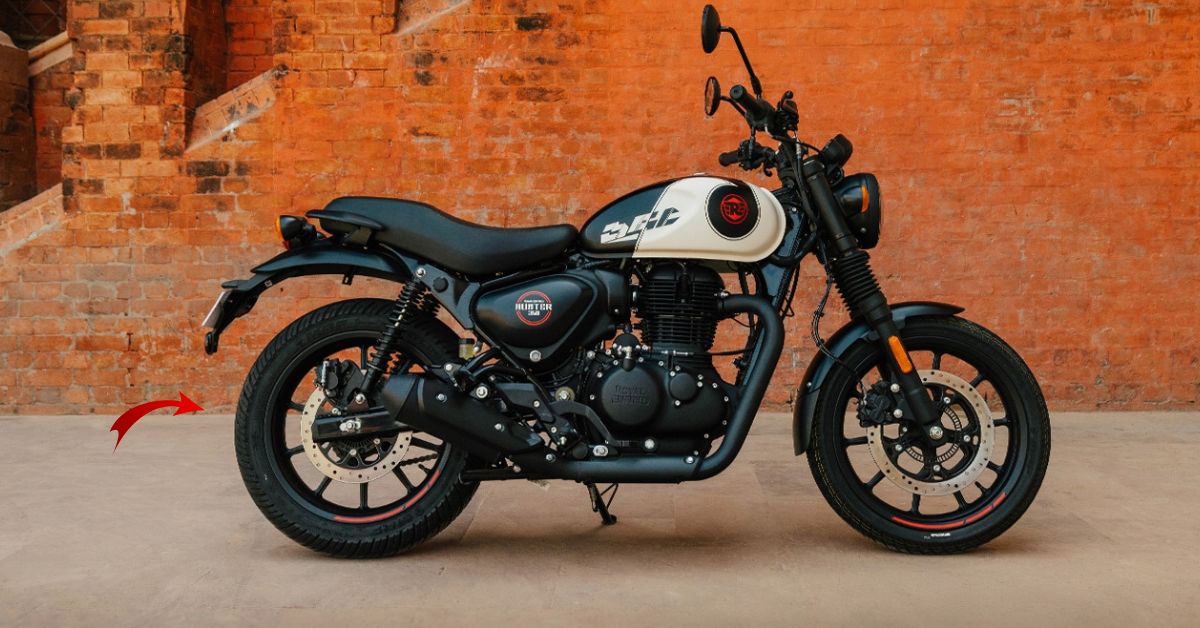
When the Royal Enfield Hunter 350 launched in 2022, it was a pivotal motorcycle for the Chennai-based manufacturer. It successfully broke the mold, offering the signature Royal Enfield character and refinement of the J-Series engine in a lighter, shorter, and significantly more agile package. It instantly became a massive hit, particularly among younger, urban riders and those seeking an easier entry point into the RE family.
For the 2025 model year, Royal Enfield has listened intently to owner feedback and rolled out a series of subtle but critical upgrades. These enhancements primarily focus on improving comfort, handling, and adding premium features, ensuring the Hunter 350 remains the dominant force in the increasingly competitive neo-retro roadster segment. This article dives into the full specifications, the specifics of the 2025 upgrades, the variant breakdown, and a comprehensive performance review.
Price and Variant Structure (2025 Update)
The Royal Enfield Hunter 350 continues to be offered in three distinct variants, catering to different budgets and feature preferences. The 2025 update saw a slight price hike of approximately ₹7,000 for the mid and top variants to accommodate the functional upgrades.
A. Hunter 350 Ex-Showroom Price (2025 India)
| Variant | Key Differentiating Features | Approx. Ex-Showroom Price | On-Road Price Range (Approx.) |
| Retro (Base) | Spoke Wheels, Single-Channel ABS, Halogen Headlamp, Drum Rear Brake | ₹1.50 Lakh | ₹1.77 Lakh – ₹1.85 Lakh |
| Dapper (Mid) | Alloy Wheels, Dual-Channel ABS, LED Headlamp | ₹1.77 Lakh | ₹2.06 Lakh – ₹2.14 Lakh |
| Rebel (Top) | Alloy Wheels, Dual-Channel ABS, LED Headlamp, Tripper Navigation (Standard), USB-C Port | ₹1.82 Lakh | ₹2.11 Lakh – ₹2.20 Lakh |
Export to Sheets
- Note: On-road prices are highly variable based on RTO, insurance, and local taxes (e.g., prices are higher in Bangalore/Mumbai than in Delhi/Kolkata).
B. New Colorways
The 2025 model introduces fresh dual-tone color options like Rio White, Tokyo Black, and London Red in the Metro (Dapper/Rebel) variants, reinforcing its youthful, globally inspired styling.
The 2025 Functional Upgrades: Addressing the Feedback
The most significant aspect of the 2025 Hunter 350 is the mechanical and functional refinement that directly addresses the shortcomings of the first-generation model.
A. Mechanical and Comfort Improvements (The Core Upgrades)
| Upgrade Feature | Description | Impact on Riding Experience |
| Slip-Assist Clutch | Introduced across all 350cc models (starting with the Hunter 350). Lighter clutch action and prevents rear-wheel hop during aggressive downshifts. | Dramatically eases clutch effort in city traffic and enhances rider confidence, especially for new riders. |
| Progressive Rear Suspension | The twin shock absorbers now feature progressive springs instead of the linear ones previously used. | Significantly improves ride comfort by better absorbing sharp bumps and preventing the harsh “kickback” on potholes and speed breakers. |
| Increased Ground Clearance | Achieved through redesigned exhaust routing. Increased from 150 mm to 160 mm. | Reduces the risk of scraping the underbelly or exhaust on large speed breakers and uneven roads, crucial for Indian conditions. |
| Redesigned Seat | Features denser foam cushioning and a slightly reprofiled shape. | Enhances comfort for both rider and pillion, particularly on longer commutes or weekend rides. |
Export to Sheets
B. Feature Upgrades
- LED Headlamp: Standard on Dapper and Rebel variants, providing superior illumination compared to the previous halogen unit.
- USB Type-C Charging Port: Standard on the Rebel variant, offering modern fast-charging convenience.
- Tripper Navigation: Now standard on the top-spec Rebel trim, providing Google Maps-powered, turn-by-turn navigation via the dedicated pod.
Engine, Performance, and Mileage Review
The Hunter 350 retains the highly acclaimed J-Series engine architecture that debuted with the Meteor 350 and Classic 350.
A. Engine Specifications and Power Delivery
| Specification | Detail |
| Engine Type | 349.34 cc, Single-Cylinder, 4-Stroke, Air-Oil Cooled, SOHC |
| Max Power | 20.2 bhp (14.87 kW) @ 6100 rpm |
| Max Torque | 27 Nm @ 4000 rpm |
| Transmission | 5-Speed Constant Mesh Gearbox (Now with Assist & Slipper Clutch) |
| Fuel System | Electronic Fuel Injection (EFI) |
Export to Sheets
B. Real-World Performance and Top Speed
The engine is characterized by its smoothness and strong, usable low-to-mid-range torque. This torque profile is ideal for city commuting, allowing the rider to easily roll on the throttle without frequent gear shifts.
- City Performance: The refined ECU tuning and slip-assist clutch make the Hunter 350 exceptionally tractable and smooth in stop-and-go traffic.
- Highway Cruising: The Hunter 350 comfortably settles into a cruising speed of 85 to 95 km/h without strain or excessive vibrations. While its top speed is around 130 km/h, sustained cruising above 100 km/h introduces minor vibrations, typical for a long-stroke 350cc single.
- 0−100 km/h Acceleration: ≈16.4 seconds. This is competitive within its segment and focuses on linear progression rather than outright speed.
C. Mileage (Fuel Efficiency)
The Hunter 350 is lauded for its impressive fuel efficiency, a major selling point for daily commuters.
- ARAI Claimed Mileage: 36.2 kmpl
- Owner Reported Mileage (Real World): Varies between 32 and 35 kmpl in mixed city/highway riding.
- Fuel Tank Capacity: 13 Litres, giving an effective range of over 400 km on a full tank.
Read more : Norton Atlas 650
Chassis and Handling: The Nimble RE
The Hunter 350’s biggest departure from the traditional RE lineup is its handling. It is the lightest motorcycle in the 350cc RE family and features the shortest wheelbase, fundamentally altering the riding dynamic.
| Chassis Feature | Specification | Impact on Handling |
| Chassis | Twin Downtube Spine Frame | Offers stiffness for better handling. |
| Kerb Weight | 181 kg | Lightest 350cc RE. Significantly easier to maneuver in traffic and park. |
| Wheelbase | 1370 mm | Shortest wheelbase in the J-Series, translating to quick, agile steering and better urban maneuverability. |
| Wheels & Tyres | 17-inch Alloy/Spoke Wheels (Front: 110/70, Rear: 140/70) | Smaller diameter and wider cross-section tyres enhance quick turn-in and grip. |
| Braking | Front: 300 mm Disc, Rear: 270 mm Disc/Drum | Dual-Channel ABS on Metro variants provides confident, stable braking; Single-Channel on Retro. |
Export to Sheets
A. Riding Comfort and Ergonomics
The Hunter 350 features a comfortable, slightly upright yet commanding posture. The 790 mm seat height is accessible to a wide range of riders, making it highly approachable for beginners or shorter riders. The revised seat foam and suspension damping in the 2025 model have effectively smoothed out the ride, making it competent on broken city tarmac without compromising its sporty feel.
Conclusion: Value, Refinement, and Appeal
The 2025 Royal Enfield Hunter 350 builds upon an already successful foundation by executing key, highly-requested refinements. The incorporation of the slip-assist clutch and the progressive rear suspension transforms the motorcycle from a good urban roadster into a truly comfortable and effortless daily commuter.
It successfully bridges the gap between the modern appeal of rivals like the TVS Ronin and the classic, thump-laden pedigree of the Royal Enfield brand. For riders seeking a motorcycle that is light on its feet, stylish, fuel-efficient, and now significantly more refined, the Hunter 350, especially in its feature-rich Metro (Rebel) trim, represents arguably the best value proposition in the Indian premium commuter segment. It is, without a doubt, the easiest and most enjoyable way to get the true Royal Enfield experience in the urban jungle.
Would you like a detailed comparison of the Royal Enfield Hunter 350 (2025) against its closest modern rival, the TVS Ronin?