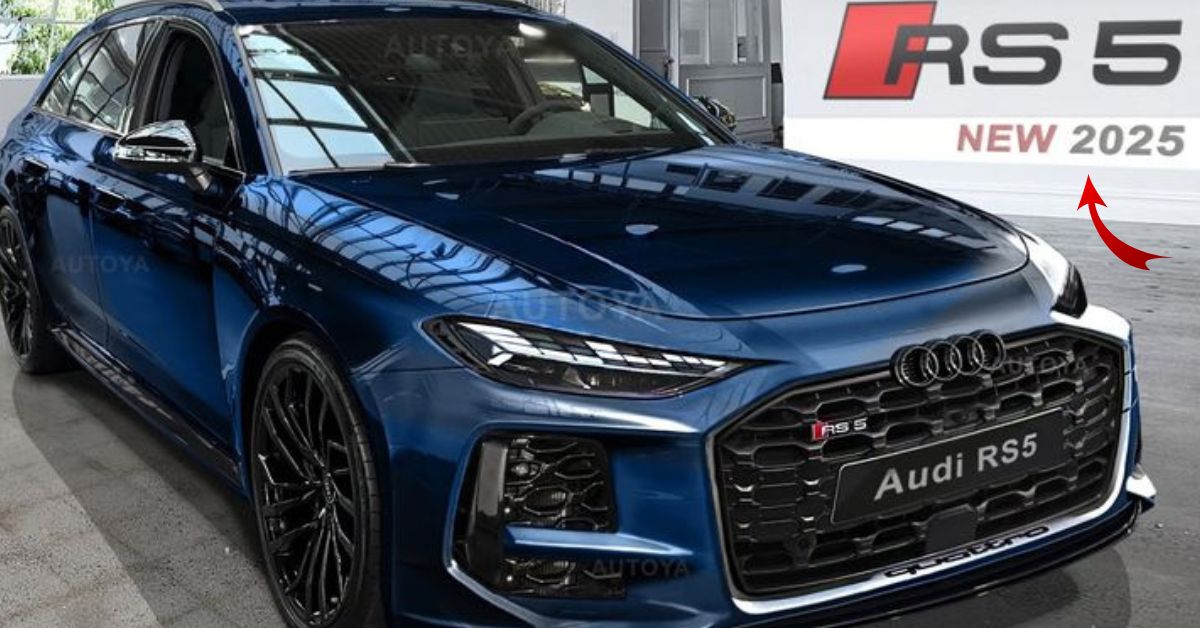
The year 2025 marks a seismic shift for Audi Sport’s mid-size performance icon. The model line, historically known as the RS 4 Avant, evolves into the Audi RS 5 Avant. This change aligns with Audi’s new naming strategy—odd numbers for combustion (Internal Combustion Engine) or hybrid models, and even numbers reserved for pure electric vehicles (EVs). However, the name is the least significant change. The true revolution lies under the hood: the 2025 RS 5 Avant is poised to become Audi Sport’s first Plug-in Hybrid Electric Vehicle (PHEV) in this segment.
The mission of the RS Avant remains sacrosanct: to offer supercar-humbling performance with the practicality of a family estate car. By integrating electric power, the 2025 RS 5 Avant not only meets stringent emissions targets but also achieves a monumental surge in power, stability, and speed, cementing its position as a high-performance, everyday champion. This article provides a deep dive into the revolutionary engine, the advanced chassis, the high-tech interior, and the thrilling performance credentials of the 2025 super-wagon.
Engine and Powertrain: The 600 hp Hybrid Heart
The shift to the Plug-in Hybrid system is the definitive feature of the 2025 audi RS5 Avant, promising a power output that far exceeds its non-hybrid predecessor.
A. The Twin-Turbo V6 PHEV Architecture
The new powertrain is a masterful fusion of internal combustion and electric boost, designed for maximum efficiency and instantaneous torque delivery.
| Component | Specification (Estimated) | Impact on Performance |
| Engine Type | 2.9 L Twin-Turbo V6 TFSI (Modified) | Familiar unit, but optimized for hybrid integration. |
| Electric Motor | Integrated into the 8-Speed Tiptronic transmission housing. | Provides immediate, seamless torque fill and boost power. |
| Battery Pack | ≈14.4 kWh Lithium-ion (Estimated) | Enables a meaningful all-electric driving range. |
| Combined System Output | >600 hp (≈447 kW) | A massive jump from the current RS 5’s 444 hp. |
| Combined Torque | >700 Nm (≈516 lb-ft) | Ensures neck-snapping acceleration from any speed. |
| Transmission | 8-Speed Tiptronic (Torque Converter) | Proven durability, modified for PHEV operation. |
| Drivetrain | Quattro Permanent All-Wheel Drive | Essential for handling the immense combined torque. |
Export to Sheets
B. Performance Metrics and Efficiency
The hybrid boost significantly improves the power-to-weight ratio (even accounting for the additional battery weight), leading to startling acceleration figures.
- 0−100 km/h Acceleration: Expected to be in the region of 3.3 – 3.5 seconds. This places it firmly in supercar territory and dramatically undercuts the current model’s 3.9 seconds.
- Top Speed (Standard): Electronically limited to 250 km/h (155 mph).
- Top Speed (Optional): Equipped with the RS Dynamic Package Plus (mandatory with ceramic brakes), the limiter is raised to 305 km/h to 320 km/h (190 mph to 199 mph).
- All-Electric Range: The 14.4 kWh battery is anticipated to offer an emissions-free, all-electric range of 50 to 70 km, perfect for silent, efficient city commutes.
- Fuel Efficiency: While the combined power is enormous, the PHEV system allows for dramatically improved overall fuel efficiency and significantly lower CO2 emissions compared to previous pure-combustion models.
Chassis and Handling: The Art of Dynamic Control
The RS 5 Avant is built on the latest evolution of the MLB platform, utilizing high-tech suspension and driveline components to deliver razor-sharp handling that belies its estate body.
A. Dynamic Driving Technologies
- Dynamic Ride Control (DRC): This hydraulically cross-linked suspension system connects the diagonal dampers via oil lines and a central valve. It actively counters body roll during cornering and pitching under acceleration/braking without the need for traditional, heavy anti-roll bars, ensuring both track-day stiffness and cruising comfort.
- Quattro All-Wheel Drive with Sport Differential: The standard Quattro system works with the Sport Differential on the rear axle, which actively shunts torque between the rear wheels. This ability to overdrive the outer wheel virtually eliminates understeer, making the Avant feel nimble and eager to turn.
- RS Adaptive Suspension: The ride height is lower than the standard A5 Avant, and the adaptive settings are recalibrated to account for the weight and torque of the new hybrid system.
- All-Wheel Steering (Expected): To further enhance maneuverability at low speeds (by turning the rear wheels opposite to the front) and stability at high speeds (by turning them in the same direction).
B. Braking and Control
- Braking System: The standard high-performance steel brakes feature fixed aluminum calipers and massive discs. For track enthusiasts and those opting for the higher top speed, RS Ceramic Brakes are available. These huge, fade-resistant discs drastically reduce unsprung mass, improving both stopping power and handling feedback.
Exterior Design and Styling: Functional Aggression
The RS 5 Avant’s design is a perfect expression of its purpose: combining the practicality of a station wagon with the visual aggression of a high-performance machine.
- Wide Stance: The car features signature flared wheel arches over its standard 20-inch (or optional larger) alloy wheels, visually distinguishing it from the standard A5.
- RS Front Fascia: The front end is dominated by a wider, flatter hexagonal Singleframe grille with a honeycomb structure, complemented by enlarged air intakes to feed and cool the hybrid components.
- Lighting: Equipped with the latest generation of Digital Matrix LED Headlights and stylized OLED Rear Lights, which offer customizable light signatures and dynamic turn indicators.
- Rear View: The Avant body culminates in a roof spoiler, a functional rear diffuser, and the iconic, large-bore dual oval RS tailpipes, ensuring that the hybrid’s V6 engine note still delivers an emotional experience.
- Charging Port: A discreetly integrated charging port on the fender is the only visual cue to the car’s revolutionary PHEV powertrain.
Interior, Features, and Practicality
The cabin of the 2025 RS 5 Avant remains a benchmark for combining high-tech luxury with usability, all with an added sporty focus.
A. RS-Specific Cockpit Technology
- Audi Virtual Cockpit Plus: The driver’s digital display features exclusive RS-specific performance layouts, including hybrid power flow meters, boost pressure, G-force indicators, and a lap timer.
- MMI Touch Response System: The central, high-resolution touchscreen provides haptic feedback and features bespoke menus for managing the PHEV system (e.g., charge settings, energy recuperation levels).
- RS Mode Button: The flat-bottomed, Alcantara or leather-wrapped steering wheel features the dedicated RS button, allowing the driver to instantly toggle between two custom, pre-saved performance modes (RS1 and RS2).
- Heads-Up Display (HUD): Optional HUD projects critical speed and navigation information directly onto the windshield, further reducing driver distraction.
B. Comfort and Utility
- RS Sport Seats: High-bolstered seats, typically covered in Fine Nappa leather or sustainable Dinamica (micro-fiber), are designed for maximum support under high lateral G-forces. They often feature an integrated headrest and RS embossing.
- Materials: Extensive use of premium finishes, including matte carbon fiber, Alcantara accents, and brushed aluminum throughout the cabin.
- Practicality (Cargo Space): The Avant body is the core practical advantage. While the underfloor battery pack may consume some volume, the RS 5 Avant is expected to still offer over 495 litres of highly usable cargo space with the rear seats up, easily expandable via the 40:20:40 split-folding rear seats. This utility is what separates it from all coupe and most sedan rivals.
Price and Market Positioning (Estimated 2025)
The introduction of the plug-in hybrid technology, combined with global inflation and the complexity of importing the car, results in a significant price premium over the outgoing RS 5 Sportback.
| Region | Expected Base Price (Conversion) | Notes |
| Germany/Europe | ≈€95,000−€105,000 | Reflects base price before options. |
| India (Ex-showroom) | ≈₹1.45 Crore−₹1.60 Crore | An estimated price hike over the current RS 5 Sportback (₹1.13 Crore) due to the new technology and CBU import status. |
| Indian Market Launch | Late 2025 / Early 2026 | Expected to follow the global debut in mid-2025. |
Export to Sheets
Key Rivals
The 2025 RS 5 Avant will directly compete with the:
- Mercedes-AMG C 63 S E Performance Estate: Also a high-power PHEV, but uses a four-cylinder engine (670 hp).
- BMW M3 Competition Touring xDrive (G81): A pure-ICE model (Non-Hybrid) but its first-ever wagon offering (510 hp).
The RS 5 Avant’s appeal lies in offering the smoother power delivery of a V6 combined with the sure-footed grip and technological sophistication of the latest generation Quattro system.
Read more : Honda Amaze 2nd Gen
Conclusion: The Hybrid Game Changer
The 2025 Audi RS 5 Avant is destined to be a landmark vehicle for Audi Sport. It successfully resolves the dichotomy between massive performance and ecological responsibility through its advanced Plug-in Hybrid system. The blend of a high-revving V6 with electric instant torque delivers a driving experience that is both brutally fast and surprisingly refined.
For the discerning enthusiast in 2025 who demands >600 hp performance, cutting-edge interior technology, the everyday usability of an Avant body, and the heritage of the four rings, the RS 5 Avant is set to be the definitive, next-generation super-wagon. It’s a statement that performance and electrification are not mutually exclusive, but rather, are the foundation for a more exhilarating future.
Would you like to see a head-to-head comparison of the Audi RS 5 Avant (PHEV) against its nearest rival, the Mercedes-AMG C 63 S E Performance Estate?