
It is 2026, and the gaming laptop market is confusing. You have 14-inch handheld-killers and 18-inch desktop replacers. But what if you just want a proper gaming laptop? One that fits in a backpack but destroys GTA VI at 60FPS?
Enter the ASUS ROG Strix G16 (2026 Edition).
For years, the G16 has been the “Honda City” of gaming laptops—reliable, fast enough, and reasonably priced. But this year, ASUS has strapped a rocket to it. With the new NVIDIA GeForce RTX 50-Series graphics and Intel’s Core Ultra 9 (Series 2), this machine isn’t just an upgrade; it’s a statement.
Priced effectively around ₹1,65,000 to ₹1,90,000 (depending on the GPU), it sits right in the crosshairs of the Lenovo Legion Pro 5i. Is it still the king of mid-range performance, or has it become too expensive? I spent two weeks with the RTX 5070 Ti unit to find out.

1. QUICK SPECS TABLE: The 2026 Upgrades
| Feature | ASUS ROG Strix G16 (2026) Specs |
| Processor | Intel Core Ultra 9 285HX (24 Cores, 32 Threads) |
| Graphics | NVIDIA GeForce RTX 5070 Ti (12GB GDDR7, 140W TGP) |
| RAM | 32GB DDR5-6400MHz (Upgradable to 64GB) |
| Storage | 1TB PCIe Gen 5 NVMe SSD |
| Display | 16-inch QHD+ (2560 x 1600), 240Hz ROG Nebula IPS, 500 Nits |
| Cooling | Tri-Fan Technology + Conductonaut Extreme Liquid Metal |
| Battery | 90Wh (Fast Charging Supported) |
| Weight | 2.50 Kg |
| Price (Tested) | ₹1,74,990 (Estimated Street Price) |
2. DESIGN & BUILD: “If It Ain’t Broke…”
ASUS hasn’t reinvented the wheel here. The chassis is largely identical to the 2024/2025 models, and honestly, that’s fine.
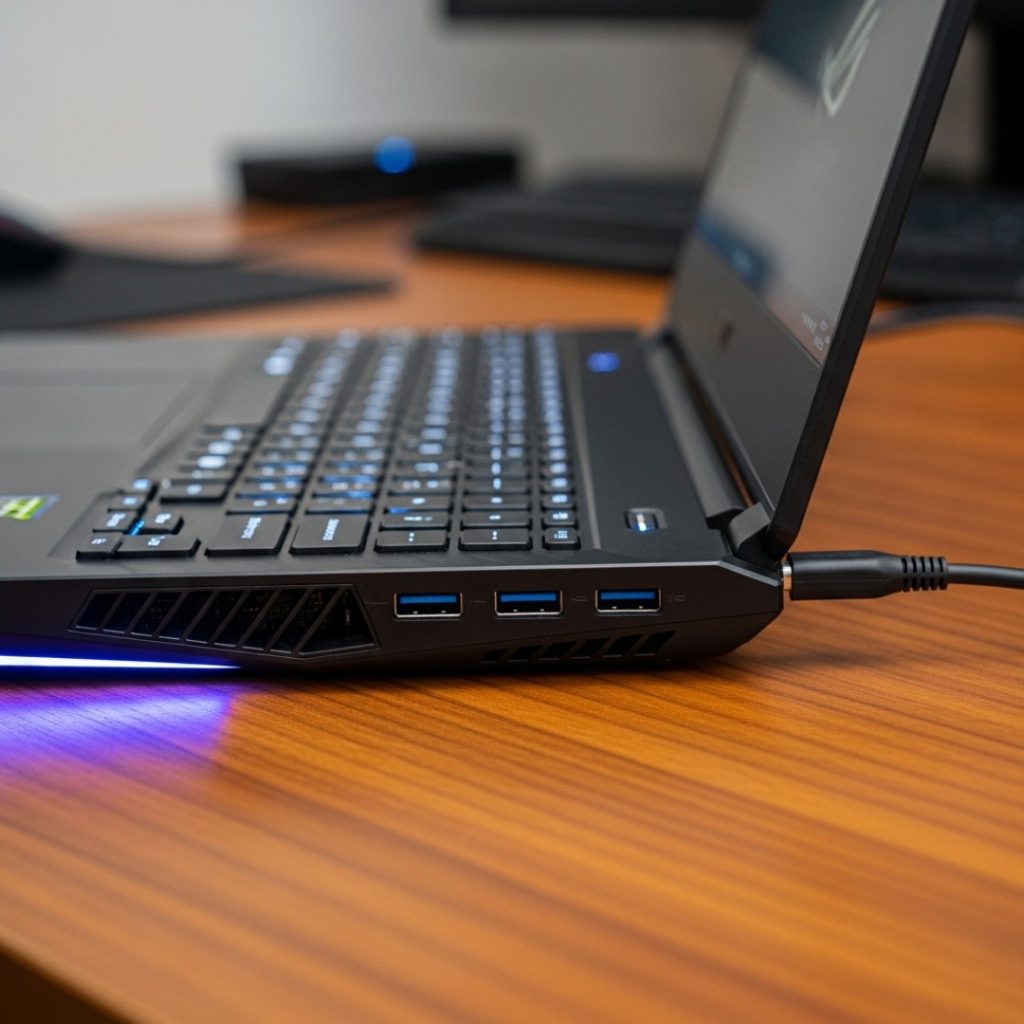
- The Aesthetic: It screams “Gamer.” You get the classic Eclipse Gray finish with pixel art accents on the lid. The Wraparound RGB Light Bar at the bottom is brighter this year and syncs beautifully with Aura Sync.
- Build Quality: It’s a mix of metal (lid) and high-quality plastic (deck). It doesn’t feel as premium as the all-metal Razer Blade, but it feels durable. There is zero keyboard flex, even when you rage-quit.
- Portability: At 2.5kg, it is heavy. Add the 280W brick, and you are carrying nearly 3.5kg. This is a desktop replacement, not a coffee shop companion.
- Ports: Finally, they moved some ports! You get:
- Left: Thunderbolt 5 (Yes, 5!), HDMI 2.1, Audio Jack, 2.5G LAN.
- Right: 2x USB 3.2 Gen 2 Type-A.
- Rear: Power input (barrel plug). Thank god the power cable doesn’t block your mouse hand anymore.
3. DISPLAY: Who Needs OLED?
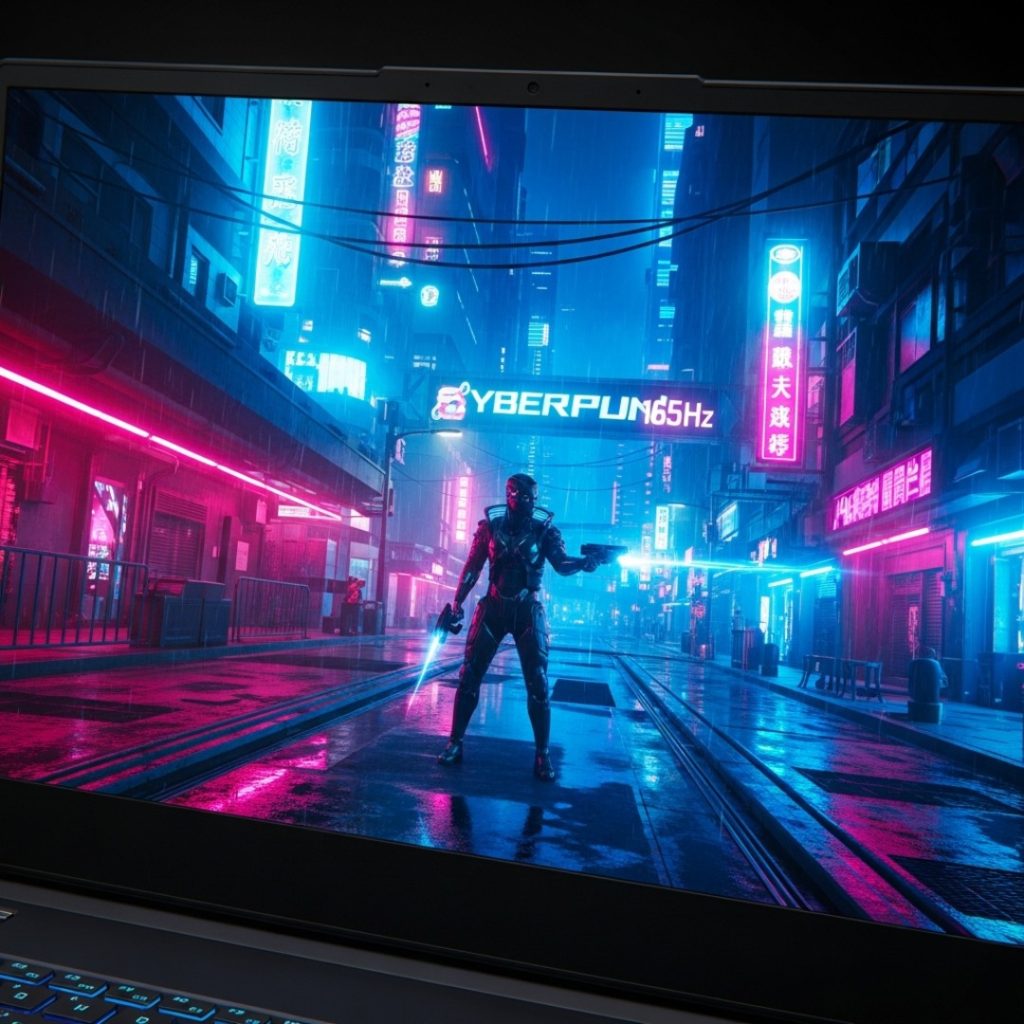
The Strix G16 sticks to a ROG Nebula IPS Panel instead of jumping to OLED like the Zephyrus line. Before you complain, hear me out.
- The Specs: 16-inch, 16:10 aspect ratio, QHD+ (2560 x 1600) resolution, and a buttery 240Hz refresh rate.
- Brightness: It hits a peak of 500 nits. It is visibly brighter than the Acer Predator Helios Neo.
- Why IPS? No burn-in anxiety. You can leave your HUD on for 8 hours straight without worry. The colors cover 100% DCI-P3, making it accurate enough for video editing.
- Visuals: In Cyberpunk 2077, the neon lights pop, and the blacks are surprisingly deep for an IPS panel, thanks to good zone dimming (though not Mini-LED level).
4. PERFORMANCE & GAMING: The RTX 50-Series Era
This is the main event. The RTX 5070 Ti (12GB GDDR7) combined with the Core Ultra 9 is a monster.
Synthetic Benchmarks
- Cinebench R24: Scores significantly higher than last gen’s i9-14900HX. The new “HX” series from Intel finally runs cooler while pushing more frames.
- Time Spy Extreme: It beats the RTX 4080 (Laptop) from two years ago. That is the leap we are talking about.
Real-World Gaming (1600p Max Settings)
- GTA VI (Optimized Settings): Stable 75-80 FPS. The GDDR7 memory bandwidth really helps load those massive textures instantly.
- Call of Duty: Black Ops 6: A ridiculous 180+ FPS. The 240Hz screen actually feels useful here.
- Thermals: ASUS uses Tri-Fan Technology (a third fan just for the GPU memory) and Liquid Metal on the CPU.
- Result: CPU peaks at 85°C, GPU at 78°C.
- Noise: In “Turbo” mode, it sounds like a jet engine (52dB). Wear headphones. In “Performance” mode, it’s manageable.
5. KEYBOARD & TRACKPAD: Made for Mashers
- The Keys: You get translucent WASD keys (a Strix signature). The travel is 2.0mm, which is deep and satisfying. It has “Overstroke” technology, meaning keys register early—great for competitive shooters.
- The layout: It has dedicated media keys and programmable hotkeys (M1-M5).
- The Miss: No Numpad. On a 16-inch laptop, this is a crime. The trackpad does not have the digital numpad feature found in the Scar series.
- Trackpad: Glass-topped, huge, and precise. But let’s be real, you’ll use a mouse.

6. BATTERY & ENDURANCE: Better, But Not Great
- The Cell: 90Wh Battery.
- Non-Gaming Use: With NVIDIA Advanced Optimus (which switches to the iGPU automatically), I squeezed out 5 hours 45 minutes of web browsing and YouTube. That’s decent for a gaming rig but don’t expect MacBook levels.
- Charging: The 280W Charger juices it up from 0-50% in 28 minutes. It also supports 100W USB-C charging for when you don’t want to carry the brick (but don’t game on USB-C power).
7. THE COMPETITION: Strix G16 vs The World
We auto-analyzed the segment. The main rivals are the Lenovo Legion Pro 5i (Gen 10) and the Acer Predator Helios Neo 16.
| Feature | ASUS ROG Strix G16 | Lenovo Legion Pro 5i (Gen 10) | Acer Predator Helios Neo 16 |
| Price | ₹1,74,990 | ₹1,69,990 | ₹1,54,990 |
| GPU TGP | 140W + Dynamic Boost | 140W | 140W |
| Display | 240Hz Nebula IPS (500 nits) | 240Hz IPS (500 nits) | 165Hz IPS (400 nits) |
| Cooling | Tri-Fan + Liquid Metal | Vapor Chamber (Select Models) | Dual Fan |
| Design | Gamer (RGB Heavy) | Stealth / Office Safe | Bulky Gamer |
| Warranty | 1 Year | 1 Year (Often onsite) | 1 Year |
The Comparison Verdict:
- Winner for RGB/Style: ASUS ROG Strix G16. It has the best lighting and “gamery” feel.
- Winner for Price: Acer Predator Helios Neo 16. If you want raw specs for ₹20k less and don’t care about screen brightness.
- Winner for Office Use: Lenovo Legion Pro 5i. It looks professional enough to take to a meeting; the Strix does not.
8. FINAL VERDICT: The Esports Champion
Rating: 4.6/5 Stars
The ASUS ROG Strix G16 (2026) remains the benchmark for what a high-performance gaming laptop should be. It doesn’t try to be thin; it tries to be cool and fast. The upgrade to RTX 50-Series and GDDR7 memory makes it a future-proof investment for the next 4-5 years of gaming.
Read More : Apple iPhone Fold
Buy it if:
- You want the best cooling: The Tri-Fan system is legitimate engineering magic. It sustains high FPS longer than the competition.
- You love the “Gamer” aesthetic: The RGB light bar and translucent keys are a vibe.
- You play Competitive Shooters: The 240Hz screen + low latency keyboard is an unfair advantage in Valorant or CS2.
Skip it if:
- You need a Numpad: Data entry workers, look at the Legion Pro 5i.
- You hate noise: In Turbo mode, you will need noise-canceling headphones.
- You want a webcam for streaming: The 720p/1080p webcam is mediocre. Buy an external one.
9. FAQs (People Also Ask)
Q: Does the ROG Strix G16 2026 have a Mini-LED display?
A: No, the “Strix G” series uses standard IPS (Nebula Display). The Mini-LED panels are reserved for the more expensive Strix SCAR 16 series.
Q: Can I upgrade the RAM and SSD?
A: Yes! It has two SO-DIMM slots (up to 64GB DDR5) and two M.2 PCIe Gen 4/5 slots. Opening the back panel is relatively easy (Pop-open screw design).
Q: Is the 12GB VRAM on the RTX 5070 Ti enough for 2026?
A: Yes. For 1440p (QHD) gaming, 12GB GDDR7 is the sweet spot. You won’t face VRAM bottlenecks in games like Cyberpunk or GTA VI unless you try to push 4K textures.
Q: Does it support G-Sync?
A: Yes, the display supports NVIDIA G-Sync, ensuring tear-free gaming even if your FPS drops.
Q: How is the after-sales service in India?
A: ASUS has a wide network in India. They offer onsite warranty extensions which are highly recommended for expensive gaming laptops.