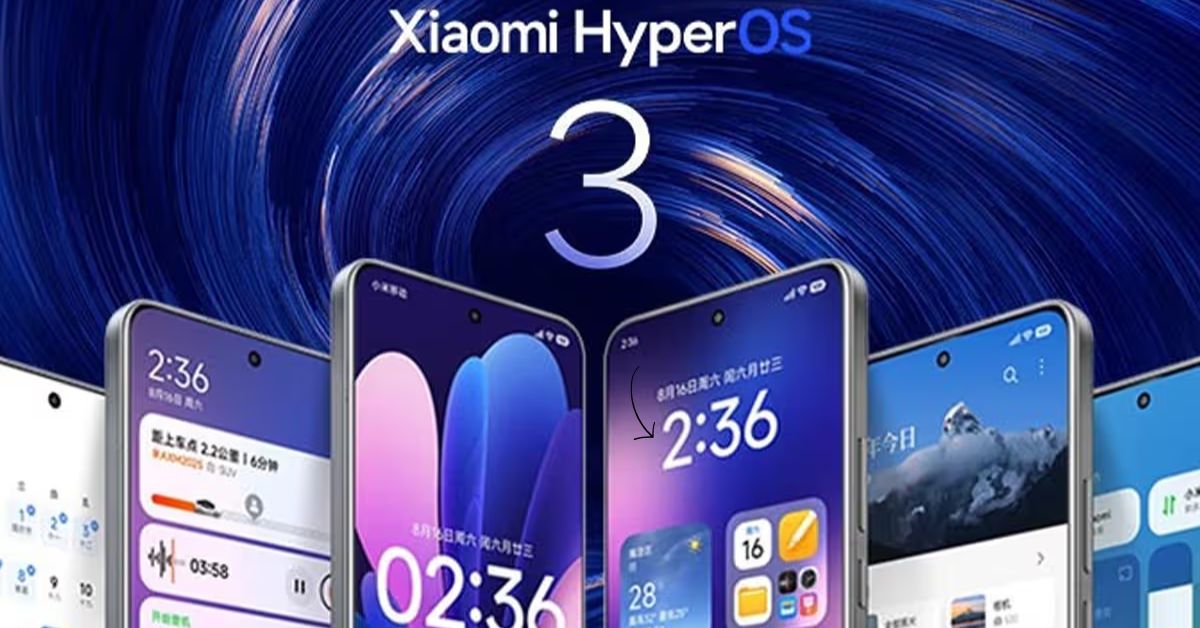
Xiaomi has officially shifted gears in India, moving beyond its traditional software roots to a more unified ecosystem with HyperOS 3. While the original HyperOS was designed to replace the aging MIUI, this third iteration focuses heavily on deep Artificial Intelligence (AI) integration and seamless connectivity between smartphones, tablets, and smart home devices.
As of January 2026, many Indian users are receiving the stable version of this update. This article explains the major changes in the software, which devices are next in line for the upgrade, and what this means for the future of Xiaomi, Redmi, and POCO users in India.
What is New in HyperOS 3?
The core of HyperOS 3 is built on a “Human x Car x Home” philosophy. In India, where Xiaomi has a massive footprint in both the smartphone and smart TV markets, this update aims to make all these devices talk to each other more effectively.
One of the most talked-about features is HyperIsland, a dynamic notification area similar to Apple’s Dynamic Island but customized for the Xiaomi ecosystem. It provides real-time updates for music, timers, and charging without interrupting what you are doing on the main screen.
AI is no longer just a buzzword here; it is woven into the system. The new AI Cinematic Lock Screen allows users to turn static photos into 3D-like depth-effect wallpapers. Additionally, the AI Writing Tools now support Indian English nuances, helping users summarize long notes or rewrite professional emails directly from the keyboard.
Features and Performance Upgrades
Xiaomi has focused on “under-the-hood” improvements to ensure that even mid-range Redmi and POCO phones feel snappy.
- Refined Animations: Over 100 system-wide animations have been rebuilt to feel more fluid. This reduces the perception of lag, especially on devices with 90Hz or 120Hz refresh rates.
- HyperConnect: This allows for “Touch to Share,” where you can move files or even sync your clipboard between a Xiaomi phone and a tablet by simply bringing them close together.
- Privacy and Security: The update introduces quantum-level encryption for data stored on the device, ensuring that biometric data like fingerprints and face scans remain localized and secure.
Update Timeline for India (January 2026)
The rollout in India is happening in phases. While flagship models like the Xiaomi 15 Ultra and Xiaomi 14 series were the first to get the stable builds, the focus has now shifted to the popular Redmi Note and POCO series.
The recently announced Redmi Note 15 Pro 5G and Note 15 Pro+ 5G are set to launch in India on January 29, 2026, and they will come with HyperOS 3 out-of-the-box. For existing users, the Redmi Note 14 series and POCO F7 series are currently receiving the January 2026 security patch alongside the HyperOS 3 upgrade.
Older mid-range favorites like the Redmi Note 13 Pro and POCO X6 Pro are expected to complete their rollout by the end of March 2026. However, it is important to note that while the UI will be HyperOS 3, some older models may receive it based on Android 15, whereas newer flagships are running it on the latest Android 16 foundation.
Why This Matters for Indian Users
For years, Indian consumers criticized Xiaomi for “bloatware” and inconsistent performance on budget devices. HyperOS 3 represents a serious attempt to clean up the interface. By optimizing the kernel—the very core of the software—Xiaomi claims to have reduced CPU idle time by 19%, which directly translates to better battery life for the average user.
Furthermore, the introduction of AI Anti-Fraud is a timely addition for India. This feature uses on-device AI to warn users about potential deepfake video calls or scam messages, providing an extra layer of safety in an increasingly digital economy.
What Happens Next?
Users should keep an eye on their system settings for an Over-The-Air (OTA) notification. Xiaomi typically releases updates in “batches,” meaning your friend might get the update a few days before you do, even if you have the same phone model.
Read More : Poco F7
Looking ahead, Xiaomi is already testing HyperOS 3.1, which is rumored to bring even deeper integration with Android 16 features. However, that update will likely be reserved for devices with higher processing power.
Frequently Asked Questions (FAQs)
1. Will my old Redmi phone get the HyperOS 3 update?
Most Redmi phones released within the last two years (like the Note 13 and Note 14 series) are eligible. However, very old budget models might only receive security patches instead of a full OS upgrade.
2. Does HyperOS 3 remove all advertisements from the phone?
While it does not remove them entirely, Xiaomi has significantly reduced the number of “pushed” notifications and ads in HyperOS 3 compared to the old MIUI. Users can also opt-out of most recommendations during the initial setup.
3. Is HyperOS 3 based on Android 16?
For the latest flagship and premium mid-range phones, yes. For older or entry-level models, Xiaomi often uses the newer HyperOS interface on top of an older Android version (like Android 15) to maintain performance.
4. How can I manually check for the update in India?
Go to Settings > About Phone and tap on the HyperOS/MIUI version logo. Click “Check for Updates.” If it is not available, you may have to wait for the next phase of the rollout.
5. Will POCO phones get the same features as Xiaomi phones?
Yes, POCO phones receive HyperOS, though they often use a “POCO Launcher” on top, which gives the home screen and icons a slightly different look compared to Xiaomi or Redmi devices.