Imagine being stuck in a dense forest, high up in the Himalayas, or stranded during a flood with zero mobile signal. Usually, your expensive smartphone becomes a useless brick. But that is changing fast.
A massive shift is happening in India’s telecom sector. State-owned telecom giant BSNL (Bharat Sanchar Nigam Limited) is rolling out a new technology that allows smartphones to connect to the internet and send messages without needing a standard mobile network tower.
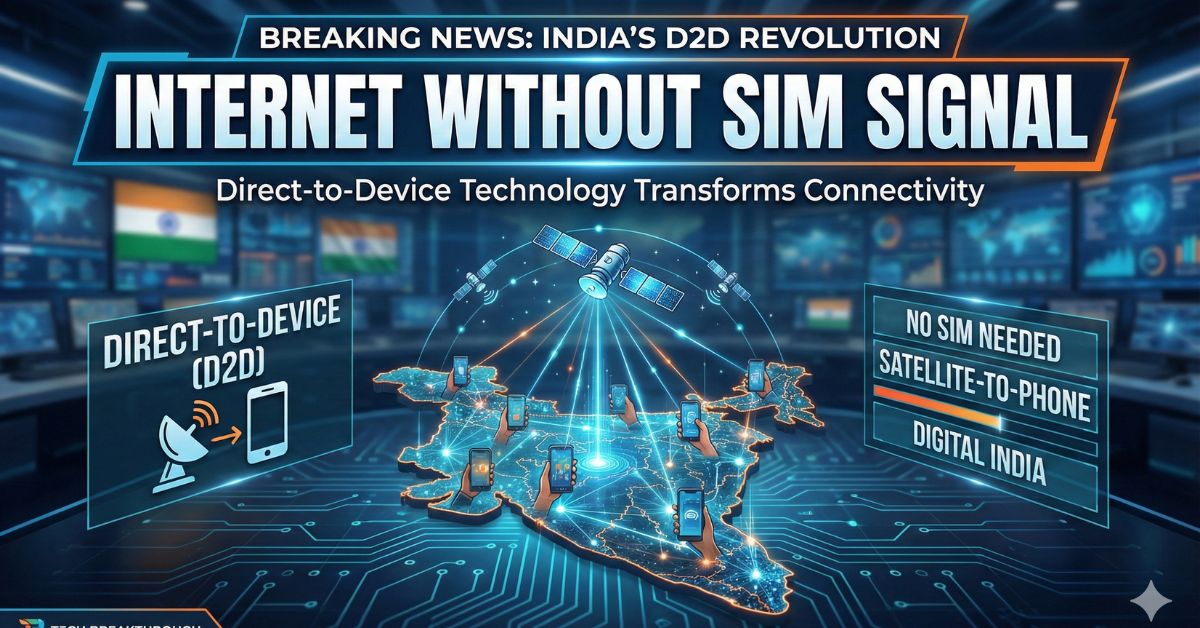
This new technology is called Direct-to-Device (D2D) satellite connectivity. Here is everything you need to know about how you can soon use the internet without a traditional mobile signal, and why this is a game-changer for India
What is BSNL’s Direct-to-Device (D2D) Service?
In simple terms, Direct-to-Device (D2D) technology allows your normal smartphone to connect directly to a satellite in space, just like it connects to a mobile tower on the ground.
Until now, if you wanted satellite internet, you needed big, expensive equipment (like a satellite phone or a dish). But BSNL, in partnership with US-based company Viasat, has successfully tested technology that brings this connectivity to regular phones.
Key Features of this Technology:
- No Tower Needed: It works where Airtel, Jio, and Vi towers cannot reach.
- Works on Normal Phones: You do not need to buy a special “satellite phone.” Modern Android and iOS smartphones (especially upcoming models) will support this.
- Emergency First: Initially, this service will focus on SOS messaging, emergency calls, and UPI payments in dead zones.
- Seamless Switch: Your phone will automatically switch to satellite mode when you lose terrestrial (tower) signals.
Why Is This “No SIM” Signal Important for India?
India is a vast country with difficult terrain. While cities have 5G, many areas still have zero connectivity. This technology solves three major problems:
1. Connectivity in Remote Areas
If you travel to Ladakh, Spiti Valley, the North East, or deep forests in Madhya Pradesh and Chhattisgarh, you often lose signal. D2D ensures you stay connected to the world no matter where you are.
2. Disaster Management
During floods, cyclones, or earthquakes, mobile towers are often the first to get damaged, cutting off communication. Satellite connectivity comes from the sky, so it remains active during disasters, allowing people to send “Safe” messages or ask for help.
3. Digital Payments Everywhere
The government wants UPI to work everywhere. With D2D, you could technically make a payment at a tea stall on a remote trekking route where no normal SIM card works.
Important Update: The “SIM Binding” Rule (Must Read)
While we talk about “Internet without SIM” technology, you must also know about a new government rule that prevents “App usage without SIM.”
Recently, the Department of Telecommunications (DoT) introduced strict “SIM Binding” rules for apps like WhatsApp, Telegram, and PhonePe.
- The Rule: You cannot use these apps on a phone if the SIM card linked to that number is not physically inside the device.
- Why: To stop cybercrimes and scams.
- The Catch: Even if you use BSNL’s satellite tech (which acts like a virtual connection), you will still need a valid subscription/identity. “Internet without SIM” refers to no dependency on a physical tower, not anonymity. You will still be a verified subscriber.
When Will This Launch?
- Trial Status: BSNL and Viasat have already completed successful trials in India (showcased at the India Mobile Congress).
- Commercial Launch: Reports suggest a commercial rollout could begin in mid-to-late 2025.
- Device Support: While the network is getting ready, mobile phone makers (like Apple, Samsung, and Google) are also updating their hardware to “talk” to these satellites.
What You Should Do Next
If you live in a remote area or travel frequently to “no-network” zones, keep an eye on BSNL’s official announcements. For now, do not buy any “Satellite SIM” sold by third parties—they are likely scams. Wait for the official BSNL launch.
Read More : Tracking Without Internet
FAQ: Internet Without Mobile Network
Q1: Will I need a new SIM card for BSNL Satellite service?
Ans: Likely not. The service is designed to work with your existing BSNL number, but you may need to upgrade your plan or activate a “Satellite Pack” once it launches.
Q2: Will it work on my current old smartphone?
Ans: Probably not. Direct-to-Device technology usually requires specific hardware chips found in newer smartphones (like iPhone 14/15/16 and latest Android flagships). Older phones may not detect the satellite signal.
Q3: Is this free?
Ans: No. Satellite connectivity is expensive to maintain. While emergency SOS messages might be free (as seen in other countries), data and calls will likely be charged at a premium rate compared to normal plans.
Q4: Can I watch YouTube videos using this satellite internet?
Ans: Not initially. The speed will be slower than 4G/5G. It is meant for messages, voice calls, and payments, not for heavy streaming like Netflix or YouTube.
Q5: Are Jio and Airtel doing this too?
Ans: Yes. Jio has partnered with SES (a satellite company) and Airtel is working with Eutelsat OneWeb. However, BSNL is currently leading the race for “Direct-to-Device” testing for normal mobile users in India.