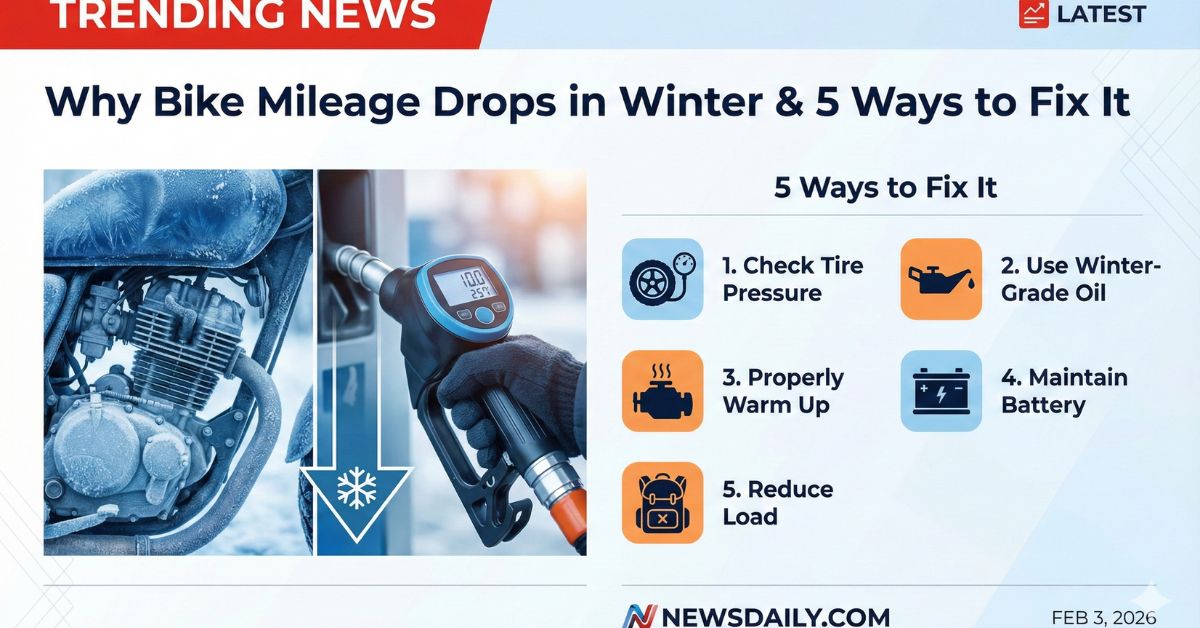
If you have noticed that your bike’s fuel efficiency (mileage) has dipped recently, don’t panic. Your engine isn’t broken, and your mechanic didn’t cheat you. A drop in mileage during winter is a very common problem for bikers across India, from the foggy streets of Delhi to the chilly mornings in Bangalore.
In winter, an average motorcycle can lose 10% to 15% of its mileage compared to summer. But why does this happen? And more importantly, can you save that petrol money?
Here is the complete breakdown of why winter is bad for mileage and expert-backed tips to get your efficiency back up.
Why Does Mileage Drop in Winter?
Before you try to fix it, it helps to understand what is happening inside your bike. There are three main scientific reasons why your bike drinks more petrol in the cold.
1. The “Honey” Effect on Engine Oil
Engine oil is like the blood of your bike. In summer, it flows easily. But in winter, cold temperatures make the oil thick and sticky, much like honey kept in a fridge.
- What happens: When you start your bike in the morning, the thick oil creates more friction (resistance) inside the engine.
- The result: Your engine has to work harder and burn more petrol just to spin its own parts.
2. Low Tire Pressure (The Silent Killer)
Science tells us that when air gets cold, it shrinks. This causes the air pressure inside your tires to drop.
- The science: For every 10°C drop in temperature, your tire pressure can fall by 1-2 PSI.
- The impact: Under-inflated tires stick more to the road (increased rolling resistance). Your engine needs more power (and fuel) to drag these “heavy” tires forward.
3. Dense Air and Drag
Cold air is heavier and denser than warm air.
5 Simple Ways to Increase Mileage This Winter
You cannot control the weather, but you can control how you maintain your bike. Follow these 5 tips to save money this season.
1. Stop Long “Idling” (The Warm-Up Myth)
Many Indian riders have a habit of starting their bike and letting it idle (run on the stand) for 5 to 10 minutes to “warm up.” This is a mistake.
- The Fix: Modern engines only need about 30 to 60 seconds of idling.
- What to do: Start the bike, wait one minute, and then ride slowly for the first 2 kilometers. Riding warms up the engine faster than idling. Idling gets you 0 km per liter!
2. Check Tire Pressure Weekly
Since cold air lowers pressure naturally, you must check your tires more often in winter.
- Pro Tip: Check pressure early in the morning when the tires are cold.
- The Right Number: Stick to the PSI mentioned on your bike’s chain guard or manual. If you carry a pillion (passenger) often, increase the rear tire pressure by 2-3 PSI.
3. Lubricate the Chain Frequently
Winter mornings often bring fog and moisture (dew). This moisture settles on your bike’s chain, causing rust and stiffness. A stiff chain drags the engine down.
- The Fix: Clean and lube your chain every 500 km. A well-lubricated chain transfers power smoothly, saving fuel.
4. Switch to Lighter Engine Oil
If you live in North India where temperatures drop below 10°C, check your owner’s manual.
- Recommendation: If your bike allows, switch to a lower viscosity oil like 10W-30 instead of 20W-50 for the winter months. The “10W” means it flows better in winter cold, reducing engine drag.
5. Park Smartly
If possible, park your bike in a garage or cover it with a bike cover at night.
Summary: Your Winter Checklist
To keep your wallet happy this winter, just remember this quick checklist:
- Don’t idle for 10 minutes; just ride slowly to warm up.
- Do check tire air pressure once a week.
- Do clean and lube your chain to fight moisture.
- Do check your air filter (winter smog clogs filters faster).
Winter riding can be beautiful, but it shouldn’t be expensive. A little care goes a long way
Read More : Is Your Daily Office Commute Killing Your Bike Engine?
Frequently Asked Questions (FAQs)
1. Does cold weather really affect bike mileage?
Yes. Due to thicker engine oil, lower tire pressure, and denser air, your bike consumes 10-15% more fuel in winter.
2. How long should I warm up my bike in the morning?
You only need to warm it up for 30 to 60 seconds. After that, ride slowly for a few minutes. Idling for too long wastes petrol.
3. Which tire pressure is best for winter?
Stick to the manufacturer’s recommended pressure (usually found on the bike’s swingarm or manual). Do not over-inflate. Just ensure it hasn’t dropped below the recommended level.
4. Can I use premium petrol to improve winter mileage?
For most commuter bikes (100cc-160cc), normal petrol is fine. Premium petrol helps keep the engine clean but may not give a noticeable mileage boost in winter.
5. Why is my bike struggling to start in the morning?
Cold weather weakens the battery and thickens the engine oil. If your battery is old (more than 3 years), it might need replacement. Kick-starting the bike in the morning can save battery life.