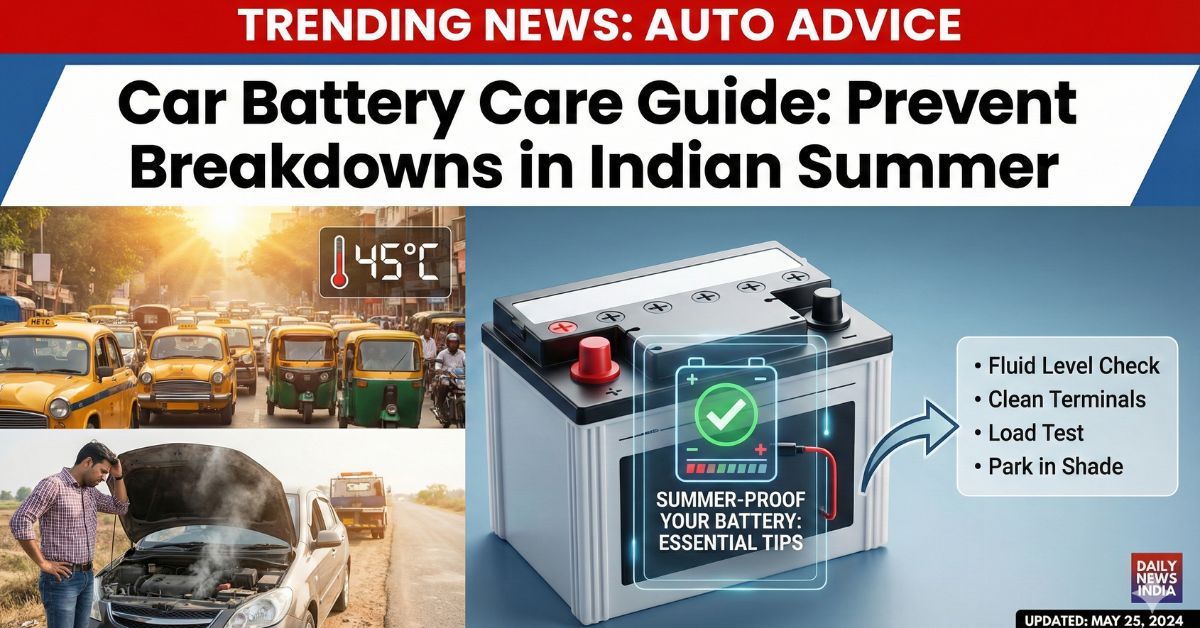
Imagine you are getting ready for an important office meeting or a family trip. You sit in your car, turn the key, and hear a dreaded “click-click-click” sound. The engine does not start. This is a common nightmare for many car owners in India.
A car battery is the heart of your vehicle. It powers the engine, lights, music system, and AC. However, the harsh Indian summer heat, rough roads, and heavy traffic can damage your battery faster than usual. On average, a car battery in India lasts between 3 to 5 years. But with the right care, you can make it last longer.
Here is a simple expert guide on how to extend your car battery life and save money on early replacements.
Why Do Car Batteries Fail Early?
Before we look at the tips, it is important to understand why batteries die. In India, the two biggest enemies of a car battery are heat and vibration.
- Heat: High temperatures cause the fluid inside the battery to evaporate. This damages the internal structure.
- Vibration: Loose batteries on bumpy roads can shake heavily. This can damage the internal plates and connections.
- Short Trips: If you only drive for 10-15 minutes, the battery does not get enough time to recharge fully.
Simple Tips to Boost Your Car Battery Life
1. Drive Your Car Regularly
Your car battery charges itself when the engine is running. If your car sits parked for many days or weeks, the battery slowly loses its charge. This is a common issue for people who have a second car that is rarely used.
What to do: Try to drive your vehicle for at least 30 minutes once a week. This gives the alternator (the part that charges the battery) enough time to refill the battery’s power. If you are going on a long vacation, consider disconnecting the battery terminals to prevent it from draining.
2. Protect It From Extreme Heat
India’s summer temperature often crosses 40°C. Extreme heat increases the chemical reaction inside the battery, which can shorten its life. It also causes the water inside the battery to dry up faster.
What to do: Whenever possible, park your car in a shaded area or a garage. If you must park in the sun, use a car body cover. This keeps the engine bay slightly cooler.
3. Clean the Terminals
Have you ever seen a white or bluish powder on your battery connectors? That is corrosion. It acts like a wall that stops the current from flowing freely. This forces the battery to work harder to start the engine, which weakens it over time.
What to do: Check your battery terminals every two months. If you see white powder:
- Mix one spoon of baking soda with water.
- Use an old toothbrush to scrub the terminals with this mixture.
- Wipe it dry with a clean cloth.
- Apply a little petroleum jelly (Vaseline) to keep them clean.
4. Minimize Power Use When Engine is Off
Many drivers have a habit of sitting in the car with the engine off but the music system, AC blower, or headlights on. This draws power directly from the battery without recharging it. This is called “deep discharging,” and it is very harmful to standard car batteries.
What to do: Make it a rule: Engine Off = Accessories Off. Before you leave your car for the night, double-check that all interior lights and headlights are switched off.
5. Check the Water Level
Many modern cars come with “Maintenance Free” batteries, but many vehicles in India still use standard lead-acid batteries that require water topping. If the water level drops below the lead plates, the battery will suffer permanent damage.
What to do: Check the water level every 2-3 months. If it is low, top it up with distilled water only. Never use tap water, as the minerals in it will destroy the battery cells.
6. Fasten the Battery Tightly
Indian roads can be bumpy. If your battery is not securely tightened in its tray, it will vibrate and shake while driving. This vibration can loosen the connections or damage the internal components of the battery.
What to do: Open the bonnet and gently try to shake the battery with your hand. It should not move. If it wiggles, tighten the clamp nuts carefully.
Signs Your Battery is About to Die
You should not wait for the battery to die completely. Watch for these early warning signs:
- Slow Crank: The engine takes longer than usual to start (it sounds like rur-rur-rur before starting).
- Dim Lights: Your headlights look yellow or dim, but become bright when you press the accelerator.
- Old Age: If your battery is more than 3 years old, get it tested by a mechanic.
Read More : Top Affordable Cars Launching in India
Frequently Asked Questions (FAQs)
1. How long does a car battery last in India?
On average, a car battery lasts between 3 to 5 years in India. However, extreme heat and poor maintenance can reduce this life to 2 years.
2. Can I change a car battery myself?
Yes, you can. However, car batteries are heavy and contain acid. It is safer to let a professional mechanic do it to ensure the connections are tight and safe.
3. Is it okay to use tap water in my car battery?
No. Never use tap water or RO water. You must only use “Distilled Water” (available at petrol pumps or battery shops) because it has no minerals that can damage the battery plates.
4. Does driving short distances damage the battery?
Yes. Short trips (less than 5 km) do not give the alternator enough time to fully recharge the battery. Occasional long drives are better for battery health.
5. How much does a new car battery cost in India?
Depending on the car model and brand (like Exide or Amaron), a new battery usually costs between ₹3,500 and ₹7,000.