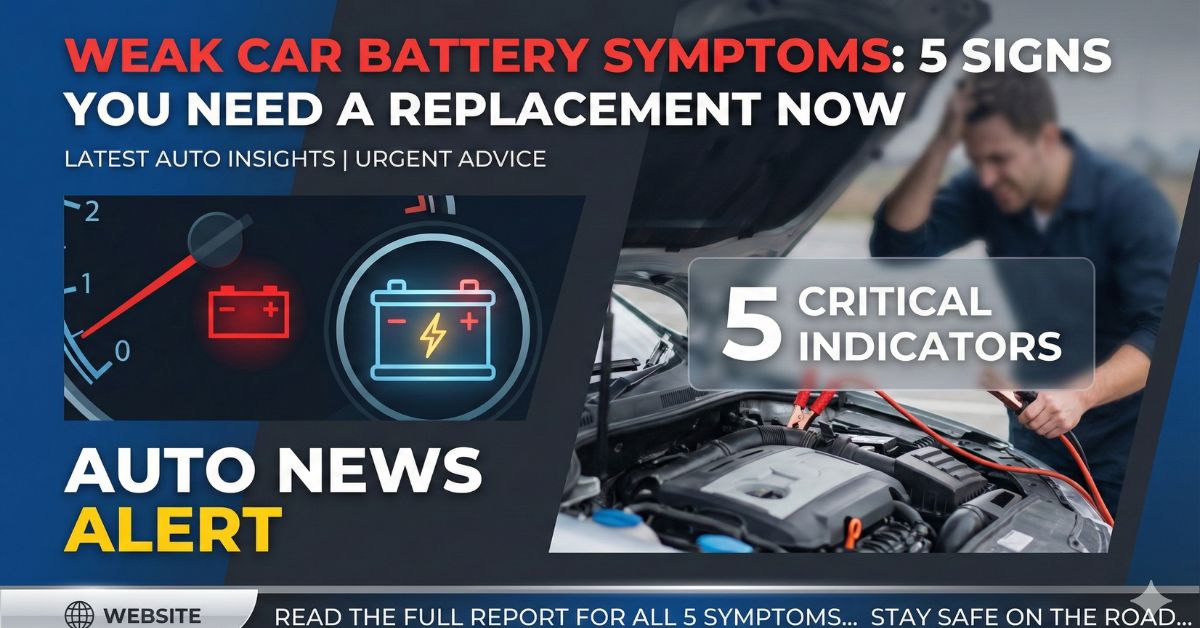
Imagine this situation, friends. You wake up early in the morning feeling fresh, get ready nicely to go to the office, or maybe you are fully prepared for a weekend road trip. Everything seems perfect. But the moment you sit in your car, turn the key, or press the start button — there is no response. The engine doesn’t start, you just hear a clicking sound, followed by complete silence.
Friends, this is one of the most frustrating and mood-spoiling situations, and honestly, it has happened to me many times as well. I have faced this problem more times than I can count. That’s exactly why today I have come with a solution to this problem. So friends, let’s understand it together.
In India, car breakdown cases spike during extreme weather—both in the scorching summer and the wet monsoon. The number one culprit is often a neglected battery. Your car battery is the heart of your vehicle’s electrical system, and like any heart, it gives you warning signals before it stops beating.
If you don’t want to be stranded on a busy highway or stuck in a parking lot, watch out for these clear signs that your car battery is weak and needs attention immediately.
1. The “Lazy” Engine Start (Slow Crank)
This is the most common sign. When you start your car, does the engine sound tired? Does it make a “rur-rur-rur” sound for a few seconds longer than usual before catching life?
- What is happening: The battery provides the power to crank the engine. If the battery is weak, it struggles to send enough current to the starter motor.
- Why it matters: In Indian traffic conditions where we use start-stop frequently, a weak crank is a serious red flag. Don’t ignore it—it often means the battery is on its last legs.
2. Dim Headlights and Weak Horn
Try this simple test at night. Start your car and switch on the headlights. If they look dimmer than usual or flicker when you press the accelerator, your battery is struggling.
- The Horn Test: In India, the horn is an essential safety tool. If your horn sounds weak, shrill, or like it has a “sore throat” when the engine is off or idling, the battery lacks the power to run it properly.
3. The Dreaded Clicking Sound
If you turn the key and hear a rapid click-click-click sound but the engine doesn’t start, your battery is likely dead or has very low charge.
- The Cause: The starter motor tries to engage but fails because there isn’t enough power. This is often the point of no return where you might need a jump start or a replacement.
4. Electronics Acting Strange
Modern cars are full of electronics—power windows, infotainment screens, and digital dashboards. A failing battery can cause “ghost” issues:
- Power windows rolling up much slower than usual.
- The radio resetting itself.
- Dashboard lights flickering. If you notice these gremlins, the battery voltage might be dropping too low to support these systems steadily.
5. Corroded Connectors (White Powder)
Open your car’s bonnet and look at the battery terminals (the two metal posts where wires connect). Do you see a white, blue, or greenish powdery substance?
- What it is: This is corrosion caused by battery acid fumes.
- The Fix: This “crust” blocks electricity flow. You can clean it carefully with hot water and baking soda, but if it returns quickly, the battery casing might be leaking or damaged.
6. The Rotten Egg Smell
Batteries should be odorless. If you smell something like rotten eggs or sulfur when you open the hood, it is dangerous.
- Danger: This usually happens if the battery has been overcharged or damaged by India’s extreme heat, causing it to leak gas. If you smell this, visit a mechanic immediately. Do not light a matchstick nearby.
7. The Battery Light on Dashboard
Your car is smart. If the battery symbol (usually a red box with + and – signs) stays on while you are driving, it means the charging system is faulty. It could be the battery itself or the alternator (the part that charges the battery while you drive).
Why Do Batteries Fail Early in India?
Car batteries in India typically last between 3 to 5 years. However, local conditions can shorten this life:
- Extreme Heat: High temperatures in cities like Delhi, Chennai, or Jaipur cause the battery fluid (electrolyte) to evaporate faster. Heat is actually a bigger battery killer than cold.
- Short Trips: If you only drive short distances (less than 15-20 minutes), the alternator never gets enough time to fully recharge the battery.
- Traffic Jams: Sitting in traffic with the AC, music, and lights on drains the battery faster than the engine can charge it.
What Should You Do Next?
If you notice any of the signs above, follow these steps:
- Check the Date: Look for the manufacturing date sticker on your battery. If it is over 4 years old, replace it proactively.
- Clean Terminals: If you see white powder, clean it to ensure a good connection.
- Get a Load Test: Go to any local battery shop or authorized service center (like Exide, Amaron, or Tata Green dealers). They can test the battery health in 2 minutes using a handheld device.
Official Update: Modern “Maintenance Free” (MF) batteries are popular now, but even they need a check-up. Most battery prices in India have seen a slight rise in 2025 due to lead prices, ranging from ₹3,500 to ₹7,500 depending on your car model.
Read More : Buying Your First Car?
Frequently Asked Questions (FAQs)
1. How long does a car battery last in India?
On average, a car battery lasts between 3 to 5 years in Indian driving conditions. However, extreme heat and rough usage can reduce this to 2-3 years.
2. Can I change my car battery myself?
Yes, if you have basic tools. However, modern cars have complex electronics that might reset if the battery is removed. It is often safer and easier to get it done by a professional or use a “doorstep battery replacement” service.
3. How much does a new car battery cost?
For a small hatchback (like Alto or Swift), it costs between ₹3,500 and ₹4,500. For sedans and SUVs (like Creta or City), it can range from ₹5,000 to ₹8,000. Always return your old battery to get a discount (rebate) of ₹500–₹1,000.
4. Can I push-start my car if the battery is dead?
You can only push-start (or “dhakka start”) a car with a manual transmission. You cannot push-start an automatic car; you will need jumper cables or a spare battery.
5. Does the AC drain the battery?
The AC runs off the engine’s power via the belt, not directly from the battery. However, the AC fan uses electricity. If you run the AC fan without the engine running, it will drain the battery very quickly.