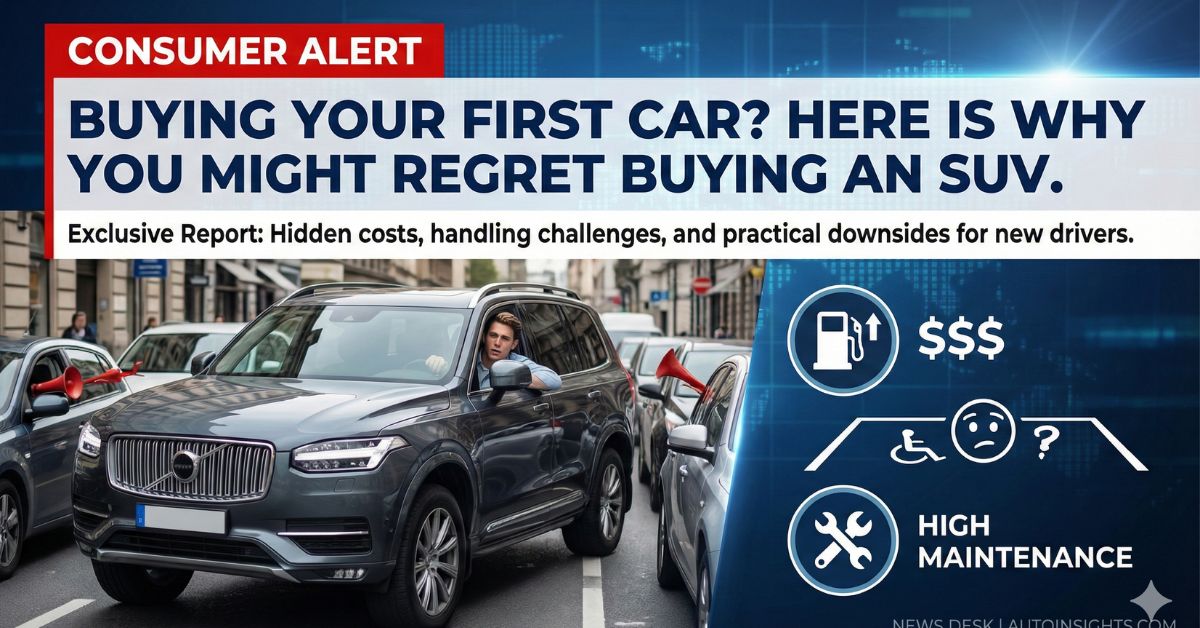
In a country like India, buying a car is no longer just a means of going from one place to another. I am sharing this from my own life experience, because a car has become a symbol of our lifestyle. While buying a car, we have to pay attention to many things—especially the budget—and it also reflects our behavior and personality.
Earlier, for many years, hatchback cars ruled Indian roads. They were the top choice because parking was easy and they were quite affordable. But in the last five years, the situation has completely changed. Nowadays, in India, out of every two cars sold, one is an SUV. From Hyundai Creta to Tata Punch, Indians have almost become crazy about big cars.
However, this does not mean that the era of hatchback cars is over—no, never. So let’s understand this from my experience.
The Big Shift: Why Everyone Wants an SUV
You have probably noticed it on your street: fewer Altos and Swifts, and more Brezzas and Nexons. Why is this happening?
- Road Presence: In Indian traffic, size matters. SUVs offer a taller seating position (high command), which gives drivers better visibility and a sense of safety.
- Ground Clearance: This is the biggest selling point. Indian roads are famous for unexpected potholes, unscientific speed breakers, and waterlogging during monsoons. An SUV with 190mm to 205mm ground clearance handles these much better than a hatchback.
- Status Symbol: Let’s be honest—an SUV is seen as an “upgrade.” Even a small “micro-SUV” like the Tata Punch feels more premium to many buyers than a similarly priced hatchback.
The Hatchback Defense: Why Small is Still Beautiful
While SUVs are trendy, hatchbacks like the Maruti Baleno, Hyundai i20, and Tata Altroz are still the smarter choice for millions of Indians. Here is why:
1. Superior Mileage (Kitna Deti Hai?)
If your daily travel involves heavy city traffic, a hatchback will save you a lot of money. Hatchbacks are lighter and more aerodynamic than boxy SUVs.
- Hatchback Reality: You can easily get 18–24 kmpl (petrol/AMT).
- SUV Reality: Due to heavier bodies and boxy shapes, most compact SUVs struggle to cross 14–17 kmpl in real-world city conditions.
2. Easy to Drive and Park
Have you tried parking a wide SUV in a crowded market in Delhi, Mumbai, or Bangalore? It is a nightmare. Hatchbacks have a smaller turning radius and fit into tight spots that SUV owners have to skip. For new drivers, a hatchback is far less intimidating to drive.
3. Better Value for Money
This is the “hidden” truth car salesmen won’t tell you.
- For ₹10 Lakhs, you get a top-model hatchback with 6 airbags, 360-degree cameras, and premium interiors.
- For the same ₹10 Lakhs, you only get a base or mid-variant SUV with missing features and plastic wheel covers.
Head-to-Head Comparison: Hatchback vs SUV
| Feature | Hatchback (e.g., Swift, i20) | SUV (e.g., Nexon, Brezza) |
| Price | Affordable (Starts ₹5-6 Lakhs) | Expensive (Starts ₹8-9 Lakhs) |
| Ground Clearance | Average (~170mm) | High (190mm – 205mm) |
| Suspension | Soft, good for city roads | Stiff, good for bad roads |
| Maintenance Cost | Low (Cheaper parts/tyres) | High (Bigger tyres, costly parts) |
| Rear Seat Comfort | Better legroom in premium hatches | Can feel cramped in sub-4m SUVs |
| Highway Stability | Good, low body roll | Good, but more body roll on curves |
Maintenance Costs: The Silent Wallet Killer
Many first-time buyers ignore this. An SUV is not just expensive to buy; it is expensive to run.
- Tyres: Replacing 16 or 17-inch SUV tyres costs 30-40% more than standard 14 or 15-inch hatchback tyres.
- Service: Labour charges and parts for SUVs are generally tagged higher by service centers compared to “entry-level” hatchbacks.
- Insurance: Higher ex-showroom prices mean you pay higher insurance premiums every single year.
Verdict: Who Should Buy What?
Buy a Hatchback If:
- You are a first-time car buyer or a new driver.
- 90% of your driving is in heavy city traffic.
- Fuel efficiency and low maintenance are your top priorities.
- You want a fully loaded car with all the tech features within a tight budget.
Buy an SUV If:
- You frequently drive on bad, broken roads or in waterlogged areas.
- You do a lot of highway travel and need a car that feels planted.
- You have elderly parents (the higher seat height makes getting in and out easier).
- You simply love the “big car” feel and high driving position.
What Happens Next?
So, I hope you liked today’s information. The conclusion we can draw is that the lines between these two segments are becoming increasingly blurred. Developers are now launching crossover cars (like the Maruti Fronx or Toyota Taisor) that look completely like SUVs but drive like hatchbacks.
The reason for this is simple: Indian customers want SUV-like looks at a hatchback price. Hopefully, in the coming time, we will see an increase in the number of such hybrid designs.
Read More : Renault Duster
Frequently Asked Questions (FAQs)
1. Which is safer, a Hatchback or an SUV?
Safety depends on the specific car’s build quality (NCAP rating), not just the body type. A 5-star rated hatchback (like Tata Altroz) is safer than a 3-star rated SUV. However, SUVs are heavier, which can offer a slight advantage in certain collisions.
2. Is an SUV harder to drive for beginners?
Slightly, yes. SUVs are wider and have larger “blind spots” around the bonnet and pillars. Hatchbacks offer a better view of the road corners, making them easier to judge in traffic.
3. Do SUVs really have higher maintenance costs?
Yes. Consumables like tyres, brake pads, and suspension parts often cost more for SUVs. Also, washing and cleaning charges at service centers are often higher for SUVs.
4. Which car is better for tall people?
SUVs are generally better for tall people because they offer more headroom and a higher seating position, offering better under-thigh support.
5. Can a hatchback handle highway trips?
Absolutely. Premium hatchbacks are very stable on highways. In fact, because they sit lower to the ground, they often have less “body roll” (swaying feeling) on sharp turns compared to tall SUVs.