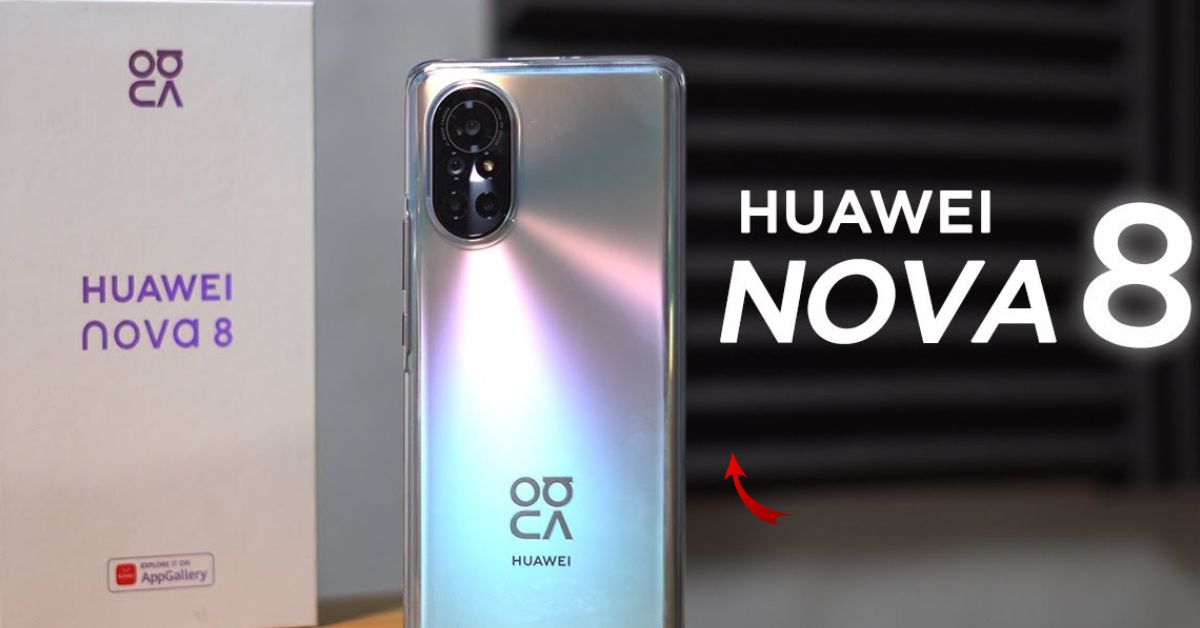
The Huawei Nova series has historically served as the bridge between the company’s flagship P and Mate lines and the mass market, focusing on style, photography, and fast charging. The Huawei Nova 8 5G, originally launched in late 2020/early 2021, remains relevant in 2025 due to its timeless design and solid specifications, particularly in markets where Huawei continues to have a strong presence and where the HMS (Huawei Mobile Services) ecosystem has matured.
Despite the complexities surrounding Huawei’s access to modern chip technology and the persistent absence of Google Mobile Services (GMS), the Nova 8 5G is a testament to Huawei’s engineering prowess. This detailed review evaluates how the device, now a few years into its lifecycle, holds up in 2025 across its critical performance, display, charging, and, most importantly, camera capabilities.
Design and Display: Premium Feel and Visual Brilliance
The Nova 8 5G stands out in the crowded mid-range segment thanks to its flagship-level aesthetics and display technology.
A. Design and Ergonomics
- Aesthetics: The Nova 8 features a sleek, thin profile with dimensions of 160.1×74.1×7.6 mm and a light weight of just 169 grams. This makes it one of the most comfortable and pocketable 5G phones available.
- Build Quality: It utilizes a premium glass-sandwich design with curved edges on both the front and back, giving it an elegant, sculpted feel that rivals more expensive flagships.
- Camera Module: The distinctive oval-shaped ‘Nebula Ring’ camera module on the rear is a signature design element of the Nova series, setting it apart visually.
B. The Curved OLED Display
The screen is arguably one of the Huawei Nova 8 5G strongest features.
| Display Specification | Detail | Assessment |
| Type | 6.57 inch Curved OLED | Vibrant colors, deep blacks (true OLED advantage). |
| Resolution | FHD+ (1080×2340 pixels) | Sharp and clear (approx. 392 ppi). |
| Refresh Rate | 90 Hz | Noticeably smoother scrolling and animations than 60 Hz, though not the 120 Hz of newer rivals. |
| Color Support | 1 Billion colors, HDR10 | Excellent multimedia consumption experience. |
| Biometrics | Optical In-Display Fingerprint Sensor | Fast and convenient. |
Export to Sheets
The curved edges not only enhance the visual immersion but also contribute to the phone’s thin feel. The 90 Hz refresh rate provides a smooth user experience, even as newer rivals push for 120 Hz.
Performance and Software: Kirin Power and the HMS Challenge
The phone’s performance is anchored by a capable chipset, but its long-term viability is tied to the software experience.
A. Core Hardware and Performance
The Nova 8 5G is powered by a high-end chip from its era:
| Hardware Component | Specification | Notes |
| Chipset | HiSilicon Kirin 985 5G (7 nm) | A powerful chipset that ensures fluid multi-tasking and strong gaming performance. |
| CPU | Octa-core (1×2.58 GHz Cortex-A76, etc.) | Flagship-level architecture for its time. |
| GPU | Mali-G77 (8-core) | Excellent graphics processing power for popular mobile games. |
| RAM/Storage | 8 GB RAM / 128 GB or 256 GB ROM | 8 GB RAM is sufficient for demanding users even in 2025. |
| Connectivity | 5G SA/NSA | Future-proof connectivity in markets rolling out 5G aggressively. |
Export to Sheets
In 2025, the Kirin 985 still provides above-average mid-range performance. While newer chipsets from Qualcomm or MediaTek may offer slight efficiency gains, the Kirin 985 handles daily tasks and demanding games like Genshin Impact well, often with good thermal management.
B. The Software Reality: HMS Ecosystem
The primary consideration for potential buyers remains the software:
- Operating System: Initially launched on Android 10/EMUI 11, the Nova 8 5G has likely been updated to HarmonyOS (HMS) or the latest version of EMUI 12/13.
- No Google Play Services (GMS): The phone operates entirely within the Huawei Mobile Services (HMS) ecosystem. This means no native Google Play Store, Gmail, Google Maps, or YouTube apps.
- HMS Solutions: Users rely on the AppGallery (Huawei’s official store), Petal Search (a search engine for APKs), and tools like Petal Maps for navigation. For users accustomed to Google services, this requires a significant workflow adjustment, though the HMS ecosystem has dramatically improved its app availability over time.
Camera Performance: A Vlogger’s Delight
The camera system on the Nova 8 5G is optimized for versatility and high-quality photo/video output, especially in well-lit conditions.
A. Rear Quad Camera Setup
The unique camera ring houses a versatile quad-lens system:
| Camera Lens | Specification | Function and Assessment |
| Primary (Main) | 64 MP,f/1.9, PDAF | Takes detailed, pixel-binned 16 MP shots (or full 64 MP). Excellent daylight performance with rich color reproduction. Lacks OIS. |
| Ultra-Wide | 8 MP,f/2.4, 17 mm (120∘ FOV) | Good for landscapes, though detail is noticeably softer than the main lens. |
| Depth Sensor | 2 MP,f/2.4 | Assists in calculating depth for realistic portrait background blur (Bokeh). |
| Macro | 2 MP,f/2.4 | Dedicated lens for close-up shots (less useful than telephoto). |
Export to Sheets
- Low Light: Without Optical Image Stabilization (OIS), the Nova 8 relies on Huawei’s powerful Night Mode software processing. Results are typically bright and usable, but can lack the crispness of OIS-equipped flagships.
- Video: Supports 4K video recording at 30 fps. Crucially, it features Electronic Image Stabilization (EIS), which is essential for smooth handheld video, though EIS effectiveness may drop at 4K resolution.
B. Front Camera and Vlogging Features
The Nova 8 5G excels in the selfie and vlogging department:
- Selfie Camera: 32 MP,f/2.0 (wide) lens. This high-resolution sensor captures excellent detail and strong dynamic range, making it a strong competitor in the segment.
- Video Features: Key features include Dual-View Video (allowing simultaneous recording from the front and rear cameras) and high-resolution 4K selfie video. This focus on dual-camera video recording makes it particularly appealing to content creators and vloggers
Read more : Google Pixel 10 series
Battery, Charging, and Price in 2025
The battery capacity is modest, but Huawei compensates with ultra-fast charging technology.
A. Battery and Charging
- Battery Capacity: 3800 mAh Li-Po. This is smaller than the 4500 mAh or 5000 mAh batteries common in 2025’s mid-range phones.
- HUAWEI SuperCharge: The battery life weakness is mitigated by the phenomenal 66 W HUAWEI SuperCharge technology.
- Charging Speed: Can charge the phone from nearly empty to 60% in just 15 minutes, and 100% in about 35 minutes. This speed makes the smaller battery far less of an issue, as brief top-ups provide hours of usage.
- Reverse Charging: Supports 5 W reverse wired charging.
B. Price and Market Status (Estimated 2025)
As an older model, the Nova 8 5G’s price has stabilized, positioning it as a value proposition in 2025 for its premium features:
| Parameter | Estimated Specification (2025) | Notes |
| Original Launch Price | ≈$500−$560 (Global) | (Late 2020/Early 2021) |
| Current Market Price (Global) | ≈$350−$450 | Pricing varies significantly by market and remaining stock. |
| Expected Price (India) | ≈₹28,000−₹34,000 | Based on original expected pricing, if available (device was not officially launched in India). |
| Competitive Status | Offers better design/charging than newer mid-rangers, but is hampered by the lack of GMS and an older SoC. |
Export to Sheets
Conclusion: A Niche, High-Value Option
The Huawei Nova 8 5G in 2025 is a study in trade-offs. It delivers a superb, flagship-level experience in its aesthetics, 90 Hz OLED display, and the truly exceptional 66 W SuperCharge. Its 64 MP camera system and advanced vlogging features remain highly capable for photography enthusiasts.
However, the phone is undeniably a niche product. The decision to purchase it hinges entirely on the user’s willingness to operate within the HMS ecosystem. If the user’s workflow does not rely heavily on Google services (Gmail, Drive, Google Pay) and they are comfortable using alternatives from the AppGallery and Petal Search, the Nova 8 5G offers a performance and design package that is hard to match at its current price point. It remains a visually stunning, incredibly fast-charging, and camera-centric smartphone, despite its age and software limitations.
Would you like a brief guide on how a user who buys the Huawei Nova 8 5G in 2025 can set up alternative services for common Google apps using the AppGallery and Petal Search?