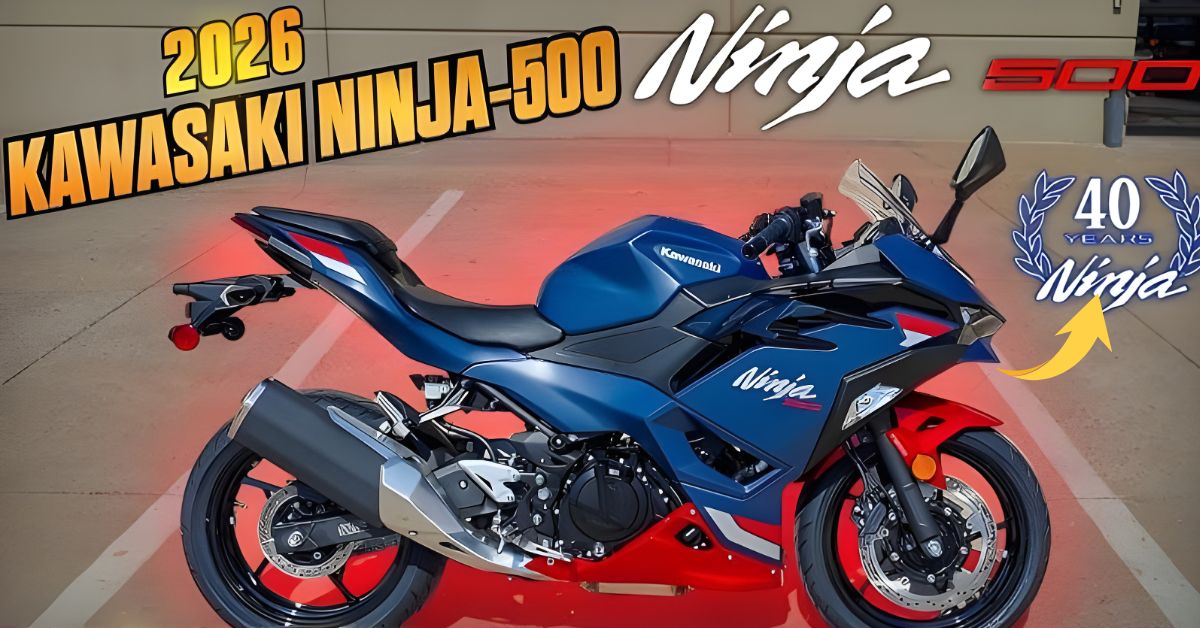
The middleweight sportbike segment has always been the crucible of true motorcycling passion, offering a blend of accessible performance and everyday usability. With the phasing out of the much-loved Ninja 400, Kawasaki answered the call for more mid-range grunt and refinement with the introduction of the Kawasaki Ninja 500. This is not a radical new motorcycle built from the ground up, but a meticulously upgraded platform that strategically addresses the key weaknesses of its predecessor while sharpening its competitive edge against newcomers in the 450cc-500cc class.
As a long-time observer and rider in this segment, I’ve taken the Kawasaki Ninja 500 through its paces, from the congestion of the city commute to the spirited attack on weekend mountain roads. This deep-dive review meticulously analyzes its mechanical heart, its updated ergonomics, and whether its premium price tag in India is truly justified by the comprehensive riding experience it offers.
Power and Engine Character: The 451cc Revelation
The core upgrade defining the Kawasaki Ninja 500 is its new 451cc liquid-cooled parallel-twin engine. While the peak power output remains similar to the discontinued Ninja 400, clocking in at approximately 45.4 PS at 9000 rpm, the real engineering brilliance lies in the torque delivery. The peak torque of 42.6 Nm arrives significantly lower in the rev range, at just 6000 rpm, compared to the highly strung 400cc unit.
This change is transformative for the riding experience. Where the Ninja 400 demanded aggressive downshifting and high revs to tap into its potential, the Kawasaki Ninja 500 offers an immediate, strong surge of mid-range torque. This translates directly to exceptional tractability; the bike is happy to pull cleanly from low speeds even in higher gears, making city riding far less fatiguing. Whether filtering through traffic or executing quick highway overtakes, the engine provides ample, usable grunt without constantly needing to dance on the 6-speed gearbox. The presence of the Assist and Slipper Clutch makes both upshifts and downshifts feather-light, preventing rear-wheel hop during aggressive engine braking and further cementing its status as an excellent choice for both novice and experienced riders.
Ride Quality and Comfort: The Commuter Sportbike Balance
Kawasaki has long mastered the art of building “comfortable sportbikes,” and the Kawasaki Ninja 500 continues this legacy. Built around a lightweight trellis frame—a proven chassis inherited from the previous generation—the bike remains agile yet stable. The geometry is tuned for approachability, featuring a highly accessible 785mm seat height and a low 171 kg kerb weight, making maneuvering in parking lots and stop-and-go traffic surprisingly easy for a middleweight sport machine.
The riding posture is perhaps the most comfortable in its class. Unlike rivals that demand a highly committed, wrist-heavy tuck, the Ninja 500 features slightly raised clip-on handlebars. This results in an upright and relaxed ergonomic triangle that places minimal strain on the rider’s wrists and back, making multi-hundred-kilometer highway days entirely feasible. The suspension setup, consisting of 41mm telescopic front forks and a preload-adjustable Uni-Trak rear monoshock, is factory-tuned to be on the firmer side. This firmness is a necessary compromise, as it delivers brilliant composure when cornering aggressively. Critically, however, the suspension manages to soak up most mid-sized road imperfections surprisingly well, maintaining control and preventing the bike from feeling jittery over less-than-perfect Indian tarmac. The ample 145mm ground clearance is also more than sufficient to tackle the vast majority of Indian speed breakers without scraping the belly.
Handling and Braking: Confident and Precise Dynamics
The handling dynamics of the Kawasaki Ninja 500 are defined by its lightweight chassis and optimized geometry. It feels immediately communicative, offering an innate sense of confidence when leaning into corners. The bike changes direction quickly and precisely, holding its line faithfully even when encountering mid-corner bumps. The light steering effort, combined with the predictable power delivery, makes it a non-intimidating track tool for beginners while still being engaging enough for experienced riders to exploit.
Braking duties are handled by a single 310mm front disc and a 220mm rear disc, complemented by Dual-Channel ABS. The Nissin calipers provide excellent bite and feedback, a feature that many testers have rated highly, often calling them the best in the segment for feel and stopping power. The brakes offer a progressive feel at the lever, allowing the rider to smoothly modulate power during both city stops and high-speed emergency maneuvers. The bike’s lightweight nature is a major asset here, contributing to shorter stopping distances and enhanced stability under hard braking.
Read More: Tricycle RV Camper
Exhaust Sound: The Parallel-Twin Symphony
One enduring legacy of liquid-cooled parallel-twin engines is the inevitable departure from the traditional deep rumble of larger V-twins or triples. The Kawasaki Ninja 500 is no exception, yet its exhaust note is far from disappointing. At idle, the sound is refined and mechanical. However, once the revs climb past 4000 rpm, the newly tuned exhaust system produces a distinct, high-pitched, and aggressive intake howl, accompanied by the signature shriek of a highly stressed Kawasaki parallel-twin. It is a sporty, engaging, and highly addictive sound that encourages the rider to explore the upper reaches of the tachometer. For those seeking even more volume, the accessible aftermarket exhaust options for this platform are vast, allowing owners to easily unlock a deeper, throatier note while maintaining the engine’s inherent smoothness.
Real-World Mileage Test and Efficiency
In the middleweight sport segment, efficiency is rarely the primary concern, but the Kawasaki Ninja 500 manages to deliver surprisingly practical fuel economy figures thanks to its parallel-twin architecture and efficient fuel mapping. The ARAI claimed mileage figure for the bike stands at a strong 26.31 kmpl.
In actual real-world testing conditions, the bike performs admirably:
- City Riding: Due to the low-end torque, which minimizes constant gear shifting, the Kawasaki Ninja 500 typically returns a solid 21 – 23 kmpl in urban traffic.
- Highway Cruising: Maintaining consistent speeds (around 90-110 km/h) in the overdrive sixth gear pushes the efficiency higher, often resulting in 25 – 27 kmpl.
With its 14-liter fuel tank, a disciplined rider can easily achieve a practical riding range approaching 350 kilometers between refills, which transforms the Ninja 500 from a mere weekend toy into a highly capable and economical long-distance tourer.
On-Road Price in India (Late 2025)
The Kawasaki Ninja 500 is positioned as a premium product in the Indian market, primarily due to its higher level of assembly (often Semi-Knocked Down or SKD/CKD) and the quality of its components. Its main rival, the Aprilia RS 457, offers strong competition, often undercutting the Kawasaki on the ex-showroom price.
The Ex-Showroom price for the standard variant of the Kawasaki Ninja 500 in late 2025 is approximately ₹ 5,66,000.
The final On-Road Price in India varies significantly based on RTO taxes, insurance costs, and optional accessories in major cities.
| City | Estimated Starting On-Road Price |
| New Delhi | ₹ 6,37,000 – ₹ 6,59,000 |
| Mumbai | ₹ 6,60,000 – ₹ 6,80,000 |
| Bengaluru | ₹ 7,05,000 – ₹ 7,20,000 |
| Kolkata | ₹ 6,90,000 – ₹ 7,10,000 |
This pricing places the Kawasaki Ninja 500 at a premium compared to its direct competitor, the Aprilia RS 457, making the purchase decision a classic trade-off between the Ninja’s proven reliability, superior refinement, and comfort against the Aprilia’s electronic features and slightly more aggressive power delivery.
Final Verdict: The Balanced Green Machine
The Kawasaki Ninja 500 is a meticulously refined motorcycle. It masterfully bridges the gap between the entry-level 300cc bikes and the full-power 650cc class, offering a substantial upgrade in torque, refinement, and modern aesthetics over its predecessor. Its greatest strength is its versatility: it is a composed, comfortable commuter on weekdays and an immensely satisfying, capable sport machine on weekends. While its price commands a premium, the quality of the chassis, the smoothness of the new 451cc engine, and the trusted reliability of the Kawasaki brand make the Kawasaki Ninja 500 one of the most compelling and balanced choices in the current Indian sportbike market.