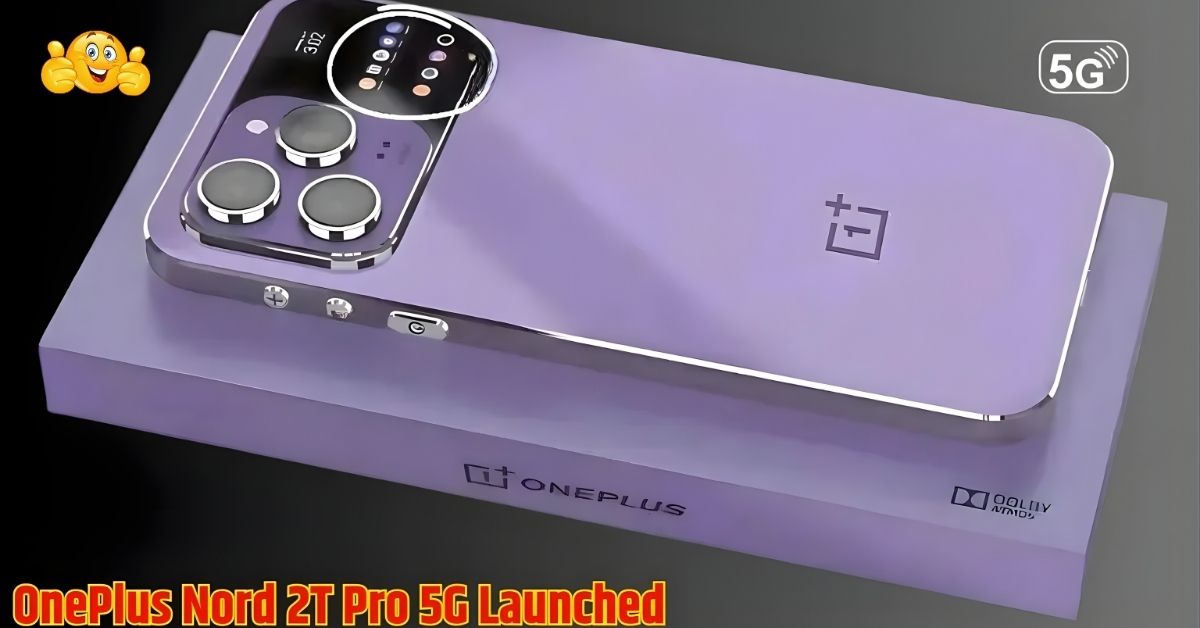
When the OnePlus Nord 2T 5G was launched, it represented a pivotal moment in the middle segment: the integration of flagship-level camera hardware and ultra-fast charging into an aggressively priced package. While it has since been succeeded by newer iterations in the Nord lineup, the 2T holds a unique position as a device that perfectly captured the “flagship killer” ethos of its time. For potential buyers looking at the long-term value, the second-hand market, or simply seeking a detailed retrospective, the performance metrics of the Nord 2T remain highly relevant in late 2025.
This detailed review dissects the two-year performance of the OnePlus Nord 2T 5G, analyzing how its powerful Dimensity 1300 chipset holds up to today’s demanding apps, evaluating the long-term consistency of its renowned main camera, and providing real-world data on battery degradation and thermal management.
Complete Specifications: The Dimensity 1300 Core
The internal architecture of the OnePlus Nord 2T 5G is built around the MediaTek Dimensity 1300 5G chipset. This octa-core processor, fabricated on a 6nm process, delivers a strong balance of high performance and power efficiency. The main CPU core is clocked up to 3 GHz, supported by the ARM Mali-G77 MC9 GPU.
This performance is paired with either 8GB or 12GB of LPDDR4X RAM and 128GB or 256GB of UFS 3.1 storage. While LPDDR4X is a generation behind the latest flagship standard, the combination with UFS 3.1 ensures that daily app switching, multitasking, and file transfer speeds remain fluid and swift, a testament to the excellent optimization of the OxygenOS platform it runs on. The device features a 6.43-inch Fluid AMOLED display with a 90Hz refresh rate, protected by Corning Gorilla Glass 5. Though 90Hz is now commonplace, the panel quality—featuring HDR10+ support and excellent color reproduction—still stands out in the mid-range segment.
| Key Specifications | Detail |
| Processor | MediaTek Dimensity 1300 (6nm) |
| Display | 6.43″ Fluid AMOLED, 90Hz, HDR10+ |
| RAM/Storage | 8GB/12GB LPDDR4X, 128GB/256GB UFS 3.1 |
| Main Camera | 50MP Sony IMX766, $f/1.8$, OIS |
| Battery/Charging | 4500mAh, 80W SUPERVOOC |
| Software (Latest) | Likely running OxygenOS 14 (based on Android 14) |
Camera Test: The Flagship-Grade IMX766 Sensor
The most significant highlight of the OnePlus Nord 2T 5G is its camera hardware, specifically the inclusion of the 50MP Sony IMX766 sensor with Optical Image Stabilization (OIS). This was, at the time of launch, a sensor typically reserved for flagship devices.
In daylight, the main camera excels, producing default 12.5MP images characterized by excellent detail, low noise, and pleasingly punchy, yet realistic, color processing. The inclusion of OIS is a major advantage for both stills and video, ensuring much sharper images, especially in less-than-ideal lighting. The camera’s performance is consistent and reliable, allowing the user to simply point and shoot with confidence.
However, the supporting cameras tell a different story. The 8MP ultrawide camera is functional but clearly inferior to the main sensor, offering images with softer details and noticeable noise, particularly indoors. The 2MP monochrome sensor is largely a gimmick, serving mostly to assist portrait shots rather than providing meaningful utility. The 32MP front camera, however, delivers crisp, detailed selfies that stand up well against newer rivals. The OnePlus Nord 2T 5G remains a fantastic camera phone primarily for its main sensor’s reliability, especially in low light, where the OIS and the sensor size truly shine.
Gaming Performance and Stability
The Dimensity 1300 chipset in the OnePlus Nord 2T 5G was a powerful mid-range performer, but how does it fare in late 2025? It remains highly competent for all daily tasks and medium-intensity gaming.
- High-Intensity Games (e.g., Genshin Impact): The Nord 2T can run demanding titles, but achieving a sustained 60 FPS requires lowering graphical settings to medium or below. The phone’s 90Hz display offers a smoother visual experience in optimized games like Call of Duty: Mobile and BGMI where it can comfortably maintain the maximum supported frame rates (typically 60 FPS) on high graphics settings. The lack of a 120Hz display is a minor disadvantage in the current market, but the overall responsiveness of the system is excellent due to the touch optimization features baked into OxygenOS.
Heating Test: Performance Under Sustained Load
A common concern with powerful mid-range processors is thermal management. The OnePlus Nord 2T 5G uses a Vapor Chamber cooling system, but under sustained, heavy load, thermal throttling is noticeable.
In stress tests, where the phone is pushed to its limit for 20-30 minutes, the device temperature typically rises to the $38^\circ C$ to $40^\circ C$ range on the back panel, especially near the camera module. Performance benchmarks show that the CPU’s output can throttle by up to 33% under prolonged stress. This means that while the phone starts gaming quickly and smoothly, competitive gamers in long sessions may experience frame rate drops as the phone attempts to cool itself. While heating is definitely present under stress, it is generally kept within acceptable limits for short-to-medium duration gaming sessions.
Battery Backup and Charging Speed
The OnePlus Nord 2T 5G is equipped with a modest 4500mAh battery. When the phone was new, users reported a reliable screen-on time (SOT) of 5 to 6 hours with mixed usage, decreasing to around 4 hours with heavy gaming and mobile data use. After two years, normal battery degradation means that most used models will likely achieve an SOT closer to 4.5 to 5 hours.
The true star of the endurance experience, however, is the charging speed. The 80W SUPERVOOC wired fast charging is still blistering by today’s standards. It charges the 4500mAh battery from 0% to 100% in a remarkable 30-35 minutes. This speed completely negates any anxiety over the battery’s medium capacity. A 10-minute top-up can easily provide several hours of usage, making the need for an all-day charge a non-issue for most users.
Read more : Realme Narzo 80 x 5G
Pros & Cons
| Pros | Cons |
| Flagship Main Camera: Sony IMX766 with OIS delivers reliable, high-quality photos. | 90Hz Display: Refresh rate is low compared to the 120Hz standard of current rivals. |
| 80W Charging: Full charge in just over 30 minutes is exceptionally fast. | Underwhelming Secondary Cameras: 8MP ultrawide and 2MP mono sensor are basic. |
| Premium Feel: Sleek design with Alert Slider and Gorilla Glass 5 protection. | Thermal Throttling: Performance can drop significantly during extended heavy load. |
| Clean Software: Runs a stable, optimized version of OxygenOS. | No Wireless Charging: Feature absent at its original price point. |
Latest Price in India and Value Proposition
The OnePlus Nord 2T 5G is officially discontinued and has been replaced by the Nord 3/4/5 series. Therefore, its primary value now lies in the secondary and refurbished markets.
- Original Launch Price (8GB/128GB): ₹ 28,999
- Original Launch Price (12GB/256GB): ₹ 33,999
Current Resale/Used Market Price in India (Late 2025):
Based on current classified listings and trade-in platforms, a well-maintained OnePlus Nord 2T 5G (8GB/128GB) typically fetches a price in the range of ₹ 9,000 to ₹ 15,000, depending on the physical condition, availability of the original box/charger, and battery health.
The resale price makes the OnePlus Nord 2T 5G an exceptional value proposition in late 2025. For under ₹15,000, you gain access to a reliable 5G device with a fantastic main camera, an AMOLED display, and a charging system that outperforms almost all brand-new devices in the ₹20,000 segment.
Conclusion: A Testament to Durability
The OnePlus Nord 2T 5G remains a highly compelling device, even years after its initial launch. It is a testament to the core OnePlus philosophy: focusing on performance essentials. Its longevity is underpinned by the reliable Dimensity 1300, the superb Sony IMX766 camera, and the game-changing 80W charging. While its 90Hz display and plastic-heavy secondary cameras show its age, its ability to deliver a premium, fast, and stable experience at its current used market price makes it one of the best value-for-money options available for anyone seeking a high-quality smartphone in the mid-range bracket in late 2025.