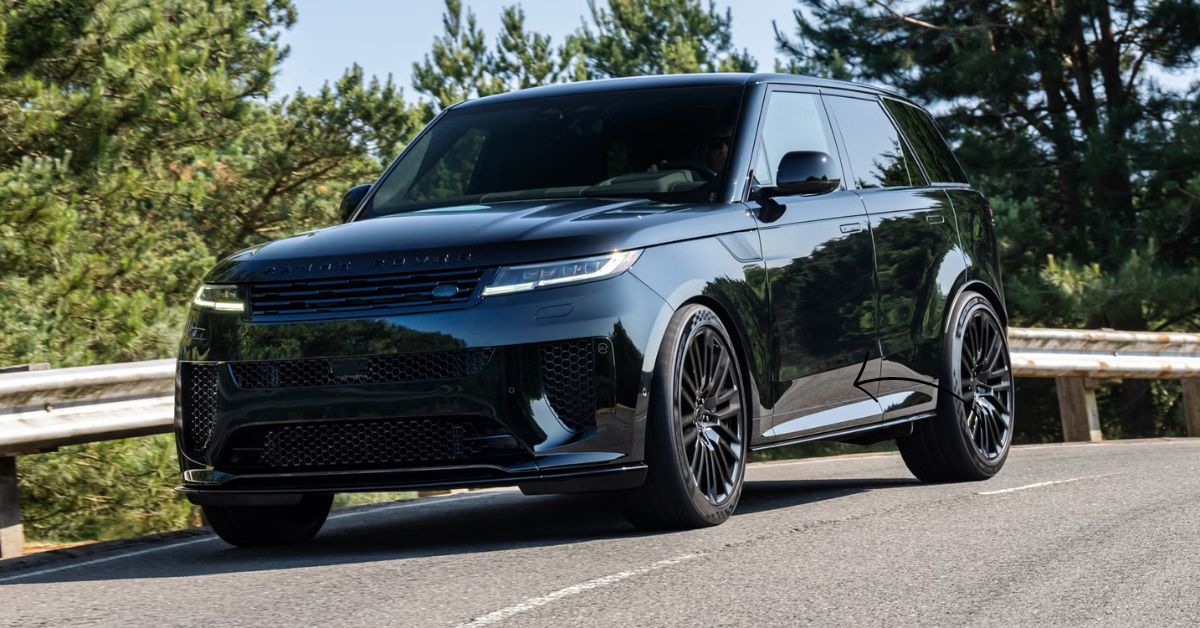
The Range Rover brand is currently undergoing its most significant transformation in the Indian market. While traditionally seen as a niche luxury import, the marquee is now shifting toward a strategy of aggressive localization and electrification. Backed by the manufacturing prowess of Tata Motors, Range Rover is no longer just a status symbol for the elite; it is becoming a cornerstone of India’s domestic luxury manufacturing story. This evolution is driven by a massive 160% surge in demand, prompting the brand to assemble its flagship models right here on Indian soil.
The Shift to Local Assembly in India
One of the most impactful updates for Range Rover in India is the commencement of local assembly for its flagship models, including the Range Rover and the Range Rover Sport. Previously, these vehicles were imported as Completely Built Units (CBUs), which attracted high import duties. By moving production to the Chakan plant near Pune and the upcoming facility in Ranipet, Tamil Nadu, the brand has been able to slash prices significantly.
The price reductions are substantial, with some variants seeing a drop of nearly ₹56 lakh. This move has made the Range Rover Autobiography and the Range Rover Sport more accessible to Indian buyers, reducing waiting periods that previously stretched for several months. The local assembly ensures that the vehicles retain the same high-performance 3.0-litre petrol and diesel engines used in their UK-built counterparts, maintaining the brand’s global quality standards.
Anticipation for the Range Rover Electric
As India moves toward a greener future, the most talked-about upcoming launch is the Range Rover Electric. Slated to arrive in India by the first half of 2026, this model is expected to be a game-changer in the ultra-luxury EV segment. Built on an 800V architecture, the electric SUV is designed to offer ultra-fast charging capabilities, reaching up to 350 kW.
Early technical specifications suggest a 118 kWh battery pack providing a driving range of approximately 530 km on a single charge. Despite the shift to electric power, the vehicle is expected to maintain its legendary off-road DNA and wading depth of 850 mm. The estimated price for the Range Rover Electric in India is expected to start around ₹3 crore, positioning it against competitors like the Mercedes-Maybach EQS and the Lotus Eletre.
The New Tamil Nadu Manufacturing Hub
A major part of Range Rover’s long-term strategy in India involves the new manufacturing facility in Ranipet, Tamil Nadu. This plant, representing a massive investment by Tata Motors, is scheduled to become operational in early 2026. Initially, the facility will focus on the local assembly of the Range Rover Evoque and Velar, with a planned capacity of 30,000 units per year.
The second phase of this plant is even more ambitious. It is expected to transition into a full-scale manufacturing hub for both Jaguar Land Rover (JLR) and Tata Motors’ premium electric vehicles. This strategic location near the Chennai and Ennore ports will also help the brand explore export opportunities from India to other global markets.
Why This Matters for the Indian Buyer
For the Indian consumer, these developments mean three things: better pricing, faster delivery, and a wider range of choices. The reduction in prices due to local assembly has already forced competitors in the luxury segment to rethink their pricing strategies. Furthermore, the localized production of high-tech components signals a maturing of the Indian automotive supply chain.
Read More: JSW Jetour T2 Hybrid SUV
As Range Rover continues to expand its “house of brands” approach—separating Range Rover, Defender, Discovery, and Jaguar into distinct identities—the focus remains on “modern luxury.” Whether it is the bespoke SV Ranthambore Edition designed specifically for India or the upcoming all-electric fleet, the brand is cementing its commitment to the Indian market.
Frequently Asked Questions (FAQs)
1. Which Range Rover models are currently assembled in India?
The flagship Range Rover and the Range Rover Sport are now assembled locally at the Chakan plant in Pune. Additionally, the Range Rover Velar and Evoque are also assembled in India, with production moving to a new Tamil Nadu facility in 2026.
2. How much did the price drop after local assembly started?
Prices for the Range Rover dropped by as much as ₹56 lakh for certain variants. For example, the Range Rover Sport saw a price reduction of approximately ₹29 lakh, making it more competitive against other luxury SUVs.
3. When is the Range Rover Electric launching in India?
The Range Rover Electric is expected to make its official debut in the Indian market in the first half of 2026. Global deliveries are also planned to commence around the same time.
4. What is the range of the upcoming Range Rover Electric?
The electric SUV is targeting a WLTP (Worldwide Harmonised Light Vehicles Test Procedure) range of approximately 530 km on a single charge, supported by a 118 kWh battery.
5. Is there a Range Rover sedan coming in 2026?
There are rumors and concept discussions regarding a “Range Rover Sedan” or an ultra-luxury electric GT from the JLR group. However, the company is currently focused on its SUV lineup and the revival of the Jaguar brand as a pure-electric luxury marque.