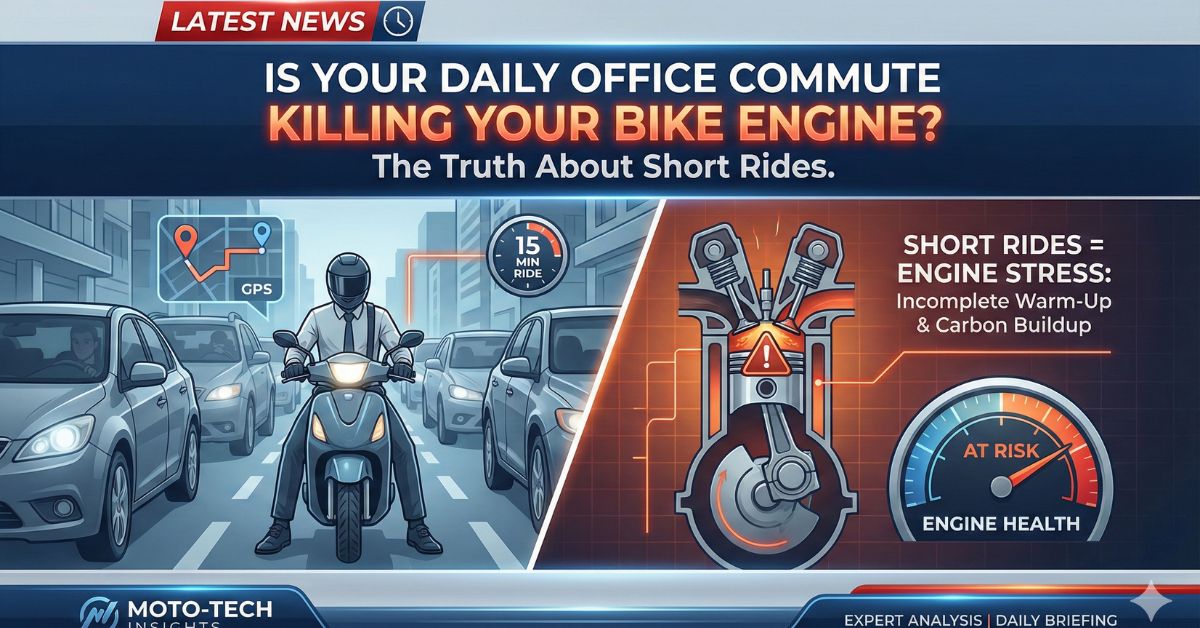
Short trips seem convenient, but they are slowly damaging your engine, battery, and mileage. Here is what every Indian commuter needs to know.
We all do it. We take the bike to buy milk from the dairy just 500 meters away, or we drive the car for a quick 2-kilometer run to drop the kids at school. In Indian cities, where traffic is heavy and distances are short, these “micro-commutes” feel like a normal part of life.
However, mechanics and auto experts are raising a red flag. While long rides are tiring for you, short-distance riding is exhausting for your machine. In fact, driving your vehicle for less than 5 to 8 kilometers at a stretch is often considered “severe driving conditions” by manufacturers.
If your daily routine involves only short bursts of riding, you might be facing hidden damages ranging from rusted silencers to dead batteries. Here is the detailed breakdown of the “Short Trip Effect” and why it matters for Indian vehicle owners.
What Counts as a “Short Distance Ride”?
Before we look at the damages, let’s define the term. A “short trip” is generally defined as:
- Riding less than 5 to 8 kilometers in normal temperatures.
- Riding less than 10 to 15 kilometers in freezing winter temperatures (like in Delhi or North India during January).
In these scenarios, your engine never reaches its optimal operating temperature. It runs “cold,” and that is where the problems begin.
The Hidden Effects on Your Engine
1. The “White Sludge” Nightmare (Oil Emulsification)
Your engine oil needs to get hot (above 100°C) to work properly. When an engine runs, it produces moisture and internal condensation. On a long ride, the heat boils this water off.
On a short trip, the engine stays cool. The water remains trapped inside and mixes with the engine oil, creating a thick, white, mayonnaise-like sludge. This “emulsified” oil cannot lubricate the engine parts effectively, leading to faster wear and tear of pistons and gears.
2. The Silent Battery Killer
This is the most common issue in India. Starting a bike or car takes a massive amount of power from the battery. The alternator (which charges the battery) needs time to replenish that drained power—usually at least 15–20 minutes of continuous riding.
If you ride for only 5 minutes, you are draining the battery to start but not driving long enough to recharge it. Over a few weeks, your battery enters a state of permanent low charge, leading to early failure.
3. Rusted Silencers (Exhaust Rot)
Have you ever seen water dripping from a bike’s silencer in the morning? That is condensation.
On a long ride, the hot exhaust gases vaporize this water. On a short ride, the water sits inside the muffler (silencer). Over time, this water reacts with the metal, causing rust from the inside out. This is why many city scooters in coastal cities like Mumbai or Chennai develop holes in their silencers so quickly.
4. Carbon Buildup and Spark Plug Fouling
Engines run “rich” (using more fuel) when they are cold to keep running smoothly. If you always stop the engine before it gets hot, this excess fuel creates carbon deposits (soot) on the spark plugs and valves. The Result: Your vehicle will start feeling “heavy,” the pickup will drop, and you might face starting trouble in the mornings.
Why This Matters for Indian Riders
In India, fuel efficiency (“Kitna deti hai?”) is a priority.
- Mileage Drop: An engine running cold consumes 15% to 30% more fuel than a warm engine. If all your trips are short, your mileage will be terrible.
- Resale Value: A vehicle with low kilometers but “high engine wear” (due to short trips) often surprises owners when it fails emission tests or requires expensive engine work during resale.
How to Protect Your Vehicle
You do not have to stop using your bike for errands, but you should change how you maintain it.
- The “Sunday Ride” Rule: Once a week, take your vehicle for a long spin (at least 15–20 kilometers) on a highway or open road. This allows the oil to heat up, burns off the moisture, and fully charges the battery.
- Halve Your Oil Change Interval: If you strictly do short trips, do not wait for the manufacturer’s recommended 3,000 km or 5,000 km oil change. Change it sooner because your oil degrades faster.
- Use a Battery Charger: If you have a high-end bike that sits idle often, consider using a trickle charger to keep the battery healthy.
- Avoid Idling to “Warm Up”: Modern engines do not need 5 minutes of idling. It is better to start and drive gently. The engine warms up faster under load (driving) than just standing still.
Conclusion
Short-distance riding is a “silent killer” for vehicles. It feels gentle because you aren’t driving far, but mechanically, it is brutal. By understanding these effects, you can save thousands of rupees in battery replacements and engine repairs. A simple weekly long drive is often the best medicine your machine needs.
Read More : What Happens If You Ignore Engine Noise?
Frequently Asked Questions (FAQs)
Q: Is a 2 km ride bad for my bike?
A: Yes, if you only do 2 km rides every day. The engine does not get hot enough to burn off harmful moisture. Try to take a longer ride once a week to fix this.
Q: Why is my bike’s mileage low even though I drive slowly?
A: Engines use more petrol when they are cold. If you only drive short distances, your engine is always in “warm-up mode,” which wastes fuel.
Q: Can short trips damage my car battery?
A: Yes. The battery uses a lot of power to start the car. A short trip (under 15 minutes) does not give the alternator enough time to recharge it fully.
Q: Should I idle my bike in the morning to warm it up?
A: You only need to idle for about 30 seconds to get the oil moving. After that, drive slowly for the first few kilometers. This warms the engine faster than standing still.
Q: How do I know if my engine has “sludge”?
A: Check your oil filler cap (where you pour oil in). If you see a milky white cream underneath the cap, that is sludge caused by moisture from short trips.