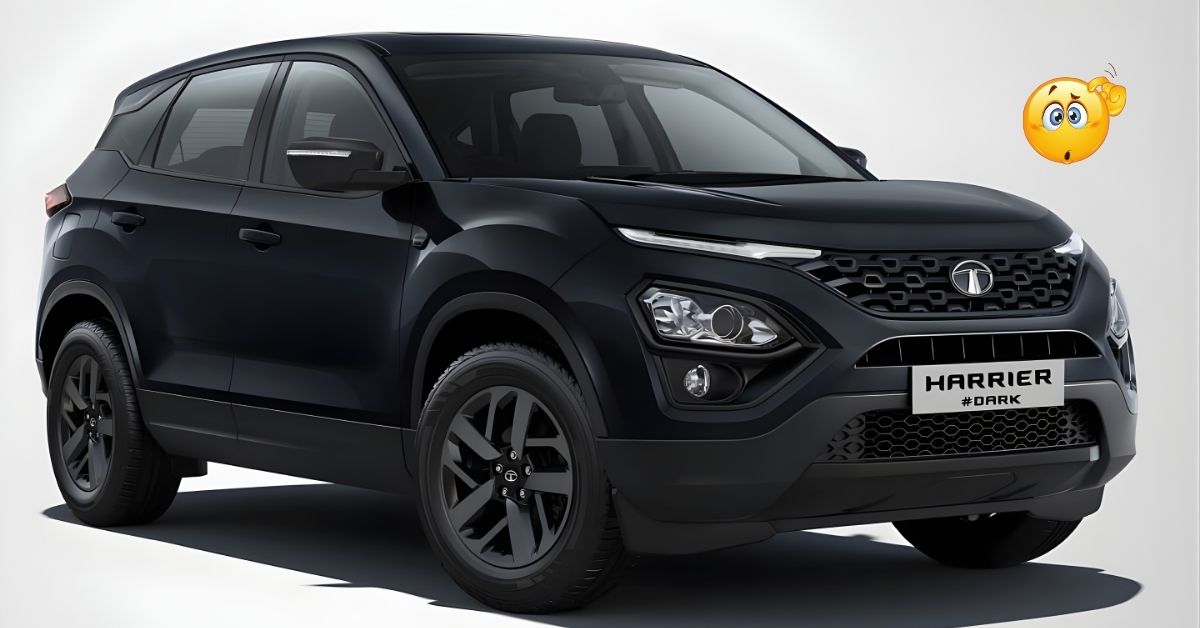
For five long years, the Tata Harrier and Safari had an Achilles heel—they were diesel-only. In a market shifting rapidly to petrol (thanks to the NCR diesel ban fear), Tata was losing customers to the Mahindra XUV700 and MG Hector.
Enter the 2026 Tata Harrier & Safari Petrol. Powered by the all-new, in-house developed 1.5L Hyperion TGDi engine, these SUVs promise refinement without compromising the “Tank-like” build.
The Price: Tata has played it aggressive.
- Harrier Petrol starts at ₹12.89 Lakh (Ex-showroom).
- Safari Petrol starts at ₹13.29 Lakh (Ex-showroom).
- This undercuts the diesel variants by over ₹1 Lakh!
But the big question remains: Can a small 1.5L engine pull a 1.8-tonne behemoth, or does it gasp for breath? I drove them back-to-back to find out.
1. QUICK SPECS TABLE (Key Highlights)
| Parameter | Harrier & Safari Petrol Specs |
| Engine | 1.5L Hyperion TGDi (4-Cylinder Turbo Petrol) |
| Power | 168 BHP @ 5000 rpm |
| Torque | 280 Nm @ 1750-3500 rpm |
| Transmission | 6-Speed Manual / 6-Speed Automatic (Torque Converter) |
| Kerb Weight | ~1,750 kg (Harrier) / ~1,820 kg (Safari) |
| 0-100 kmph | ~10.5 Seconds (Tested) |
| Fuel Tank | 50 Litres |
2. EXTERIOR DESIGN & ROAD PRESENCE
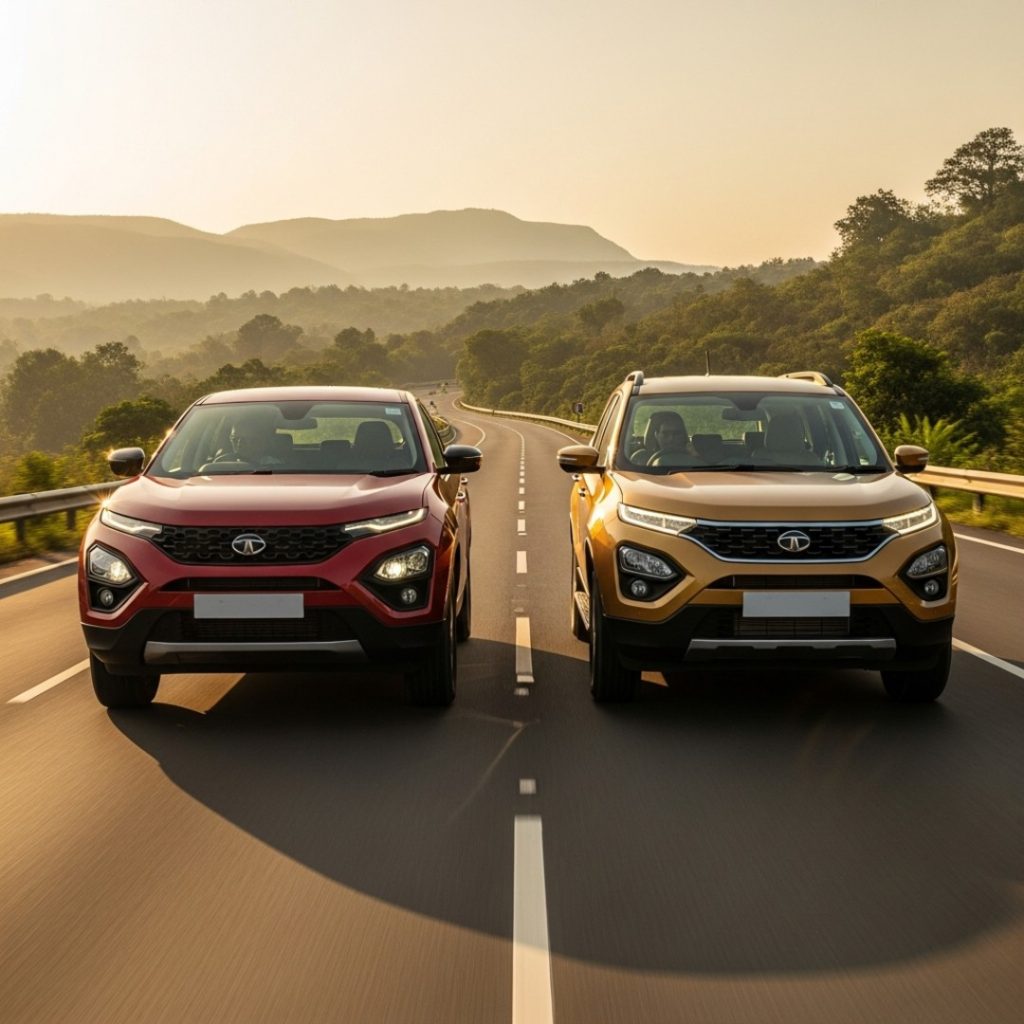
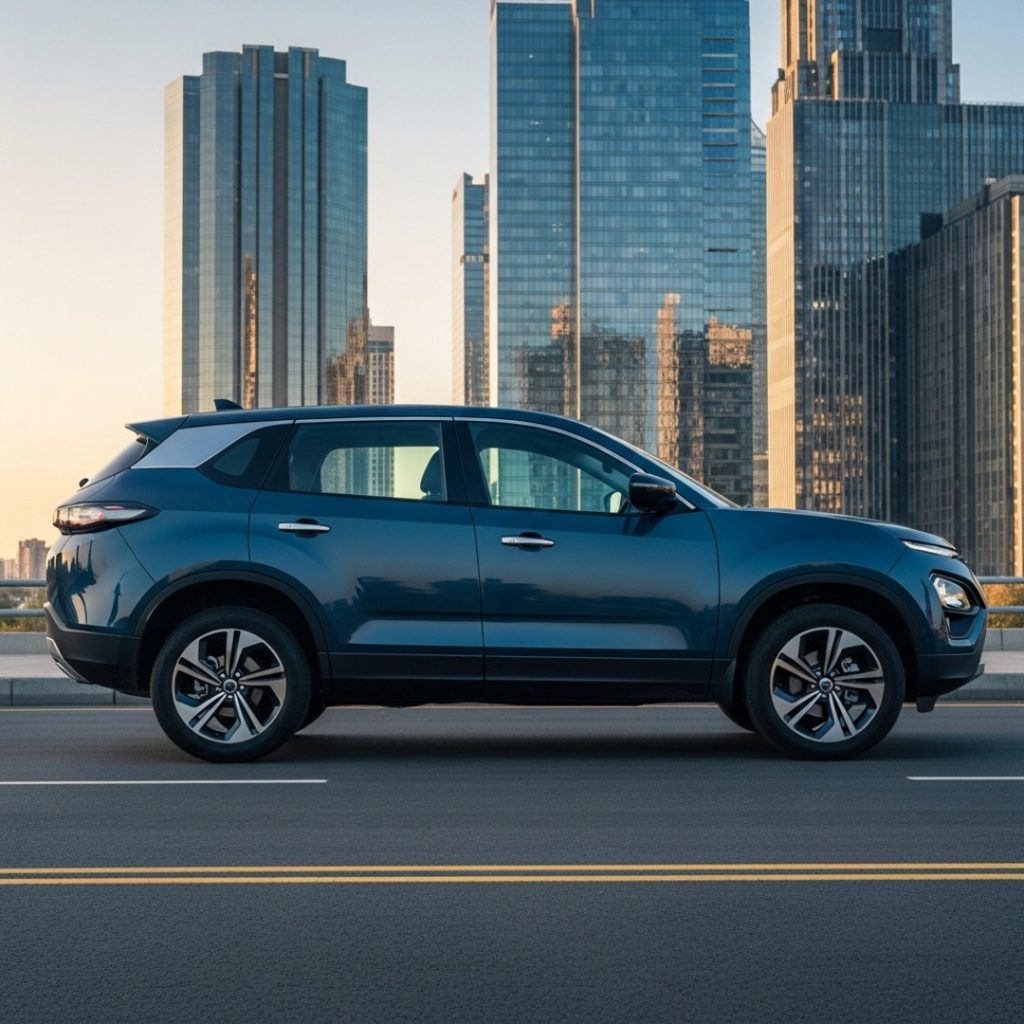
If you loved the facelifted design from late 2023, you’ll love this. Nothing has changed, and that’s a good thing.
- Badging: The only giveaway is a small “TGDi” badge on the boot lid. No flashy “Turbo” stickers.
- The Face: The connected LED DRLs with the “Welcome Function” still look futuristic. The Safari gets the parametric grille with body-colored inserts, while the Harrier keeps it sporty with black elements.
- Wheels: Both ride on massive 19-inch spider-alloy wheels (on top trims), filling the arches perfectly.
- Road Presence: They still dwarf the Creta and Seltos. When a Harrier looms in the rearview mirror, people move over.
3. INTERIOR, COMFORT & FEATURES
Tata has upped the game with the 2026 update.
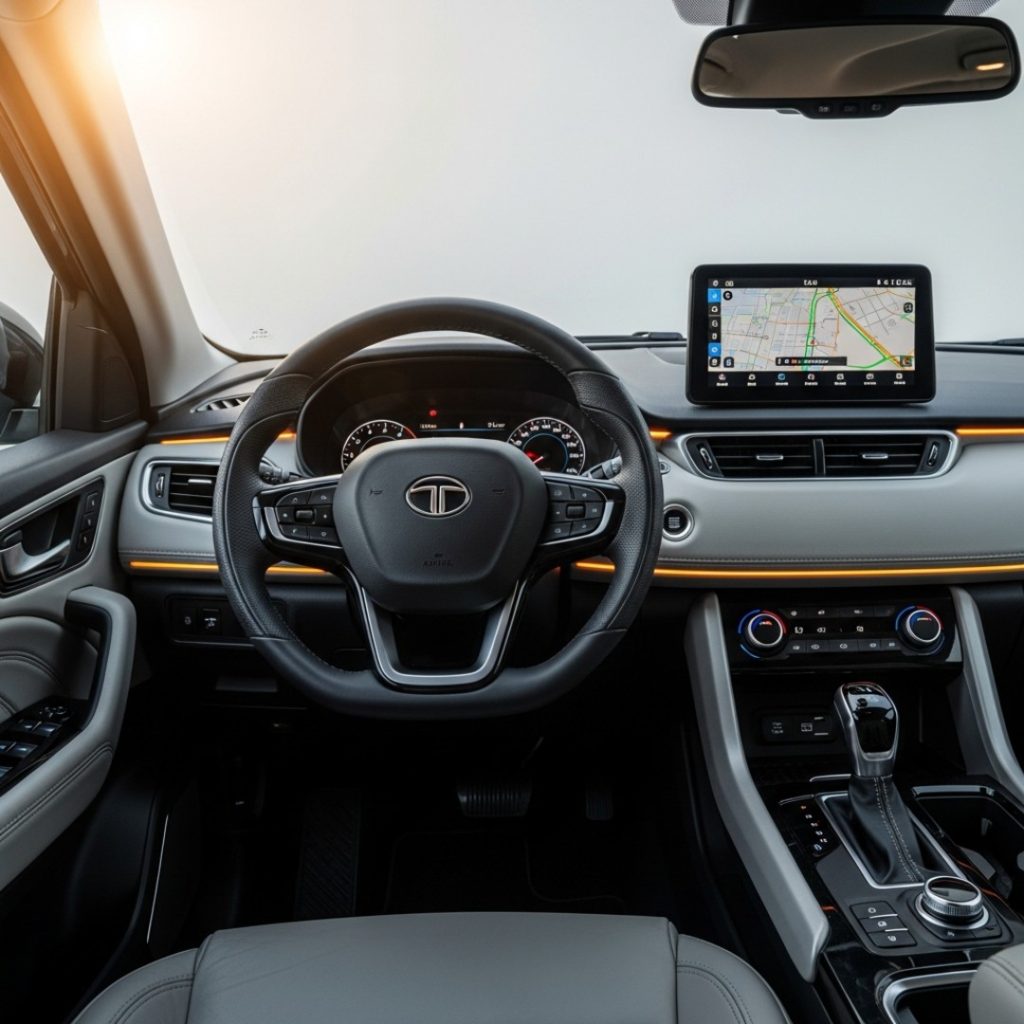
- The Screens: The 14.5-inch Neo QLED infotainment system is massive. It’s brighter, faster, and crisper than the iPad in your house. The UI finally feels lag-free.
- Material Quality: The dashboard is wrapped in premium soft-touch leatherette. The Safari gets a “Biarritz Blue” & White theme (very premium but hard to keep clean), while the Harrier sticks to a sporty All-Black or Red theme.
- Comfort:
- Front: Ventilated seats are standard from the mid-variants. The driver seat has a 6-way power adjust with Memory Function.
- Rear (Safari): The captain seats with “Boss Mode” (electric boss lever) and ventilated rear seats (in 6-seater) make it the best chauffeur-driven car under ₹30 Lakh.
- Third Row (Safari): Still best for kids or short adults on short trips.
- Features:
- Gesture Controlled Tailgate: Kick under the bumper to open.
- Dual-Zone Climate Control: Finally standard on higher trims.
- JBL Audio: The 10-speaker system with a subwoofer is essentially a concert hall on wheels.
4. ENGINE PERFORMANCE & DRIVING DYNAMICS
This is what you came for. A 1.5L engine in a Safari? It sounds underpowered on paper compared to the XUV700’s 2.0L (200 BHP).
City Drive (Refinement King)
Press the start button, and… silence. This is the quietest Tata car ever made. The vibrations are non-existent.
- Low End: The turbo lag is well-masked. The engine wakes up around 1700 rpm. In city traffic, the 6-Speed Torque Converter (Automatic) is smooth. It doesn’t jerk like a DCT. It holds gears slightly longer to keep you in the powerband.
Highway Drive (Adequate, Not Explosive)
- Cruising: It sits comfortably at 100 kmph at just under 2000 rpm.
- Overtaking: This is where you miss the 2.0L Diesel’s torque. You have to mash the throttle to get a move on. It gathers speed linearly rather than explosively. It’s not a “pushes you back in the seat” feeling like the XUV700; it’s a “dignified progress” feeling.
- Steering: The Electric Power Steering (EPS) is light at parking speeds and weighs up beautifully on highways.
- Suspension: This is Tata’s home turf. The suspension flattens bad roads. You don’t slow down for potholes in a Harrier; you glide over them.
5. SAFETY (Crucial Section)
Tata continues its legacy of safety.
- BNCAP Rating: Both cars have scored a 5-Star Rating in Bharat NCAP (Adult & Child).
- Airbags: 7 Airbags are standard across the range.
- ADAS Level 2: Includes 12 features like Autonomous Emergency Braking, Lane Keep Assist, and Adaptive Cruise Control.
- Real World Note: The Adaptive Cruise Control is usable on expressways, but the Lane Keep Assist is too intrusive for Indian city roads.
6. REAL WORLD MILEAGE (The Truth)
Here is the bitter pill. A heavy SUV + Turbo Petrol Engine = Frequent Fuel Stops.
- ARAI Claimed: ~16.3 kmpl
- Real World (City Traffic): 8.5 – 10 kmpl (If you drive aggressively, expect single digits).
- Real World (Highway): 13 – 14.5 kmpl (Cruising at 90 kmph).
Verdict on Mileage: If your monthly running is over 1,500 km, stick to the Diesel.
7. THE COMPETITION: Petrol SUV Battle
The Harrier/Safari Petrol enters a ring dominated by the Mahindra XUV700 and MG Hector.
| Feature | Tata Harrier/Safari Petrol | Mahindra XUV700 (Petrol) | MG Hector (Petrol) |
| Engine | 1.5L TGDi (168 BHP / 280 Nm) | 2.0L mStallion (197 BHP / 380 Nm) | 1.5L Turbo (141 BHP / 250 Nm) |
| Performance | Smooth & Linear | Rocket Ship | Sluggish |
| Ride Quality | Best (Rugged) | Balanced | Soft/Floaty |
| Mileage (City) | 9-10 kmpl | 8-9 kmpl | 8-9 kmpl |
| Tech/Features | 10/10 (Gesture Tailgate) | 9/10 | 9/10 (Portrait Screen) |
| Price (Top) | ~₹24.68 L | ~₹25.50 L | ₹22.00 L |
Winner:
- Choose XUV700: If you want raw power and acceleration (200 BHP is unmatched).
- Choose MG Hector: If you want a city car with the most comfortable rear seat and don’t care about driving dynamics.
- Choose Tata Harrier/Safari: If you want the Best Looks, Best Build Quality, and a car that can handle rough roads better than the others.
8. FINAL VERDICT
Score: 8.5/10
The Tata Harrier and Safari Petrol are not for the drag racers; they are for the refined cruisers. They fix the biggest complaint (diesel noise) and offer a properly premium experience at a lower entry price.
Read More : 2026 Maserati MC20
Buy it if:
- You live in NCR: And are scared of the 10-year diesel ban.
- You want a Silent Cabin: The refinement is Lexus-level good at city speeds.
- You want Road Presence: They still look better than everything else on the road.
Skip it if:
- You want Mileage: 9 kmpl in the city will hurt.
- You crave Performance: The XUV700 Petrol will leave this in the dust at a traffic light.
- You ignore fit & finish: While improved, panel gaps are still visible in some hidden areas.
9. FAQs (People Also Ask)
Q: Is the Tata Harrier Petrol underpowered?
A: No, 168 BHP is adequate for daily use and highway cruising. However, it lacks the explosive punch of the XUV700’s 200 BHP engine
Q: What is the waiting period for Harrier Petrol?
A: Since it just launched, expect a waiting period of 6 to 8 weeks for popular colors like Pebble Grey and the Dark Edition.
Q: Is there a CNG option?
A: No. A CNG variant for such a heavy turbo-petrol car is highly unlikely in the near future.
Q: Which transmission is better: Manual or Automatic?
A: Definitely the Automatic. The clutch on the Manual is long, and the Automatic suits the relaxed nature of this engine perfectly.