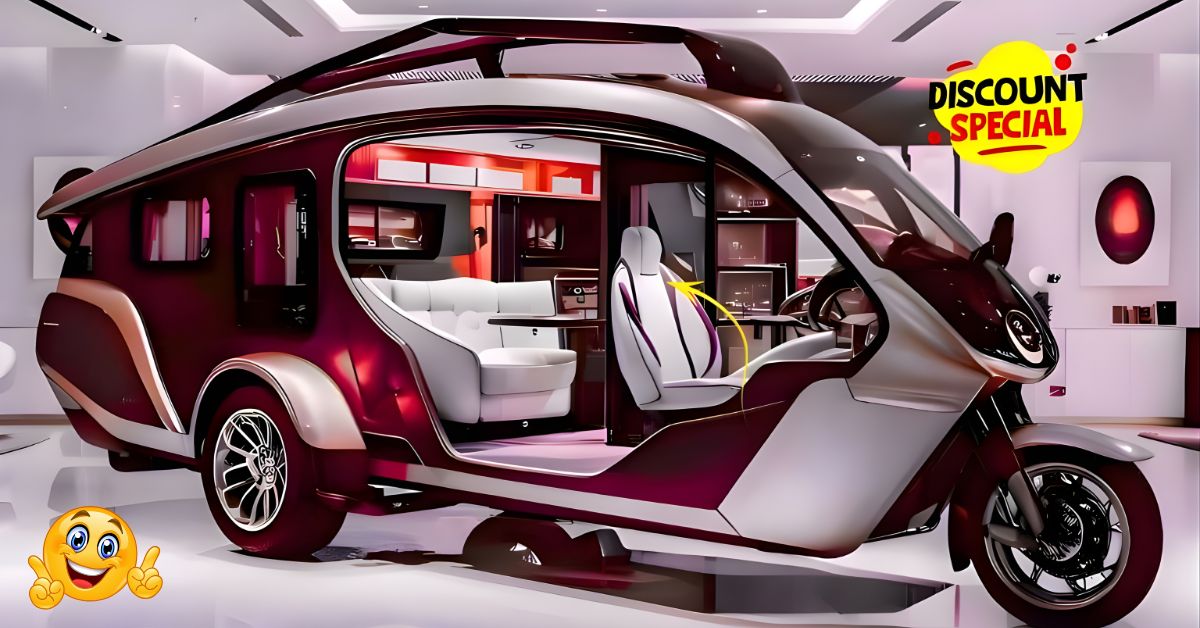
The world of recreational vehicles is undergoing a seismic shift, moving away from massive, fuel-guzzling motorhomes toward a more sustainable and minimalist form of travel. At the vanguard of this new micro-mobility movement is the Tricycle RV Camper, a revolutionary concept that has recently transitioned from speculative design renders into viable, production-ready models. This is not simply a trike with a tent strapped to the back; it is a fully integrated, self-contained tiny home built around an electric three-wheel chassis. It represents a philosophical pivot: proving that extensive, independent travel can be achieved without the colossal footprint and environmental guilt of traditional RV ownership.
In this full, expert review, we dissect this emerging category, focusing on the common and most advanced features found across flagship models (often labeled as the 2025/2026 model year). We analyze how the three-wheel configuration impacts everything from handling to interior design, and we provide a realistic breakdown of the costs associated with entering this pioneering lifestyle.
Design and Aerodynamics: The Futuristic Teardrop
The exterior design of the modern Tricycle RV Camper is fundamentally driven by efficiency. Most high-end iterations adopt a sleek, aerodynamic teardrop shape, a classic RV profile optimized for minimal drag, which is absolutely crucial for maximizing the range of an electric vehicle. The three-wheel layout, typically featuring one wheel at the front for steering and two at the rear for stability, is critical to achieving a narrow, agile footprint that makes this vehicle genuinely maneuverable in environments where traditional RVs dare not tread—from narrow European village streets to tight urban parking spots.
Constructed primarily from lightweight yet durable materials like reinforced aluminum and composite panels, the overall chassis is designed for lightness. This is where the engineering genius lies: the bodywork is not merely aesthetic but structural, allowing for low curb weight despite the integration of extensive camping amenities. The ultra-modern look is often completed with full-width LED lighting strips integrated seamlessly into the body, emphasizing its futuristic, eco-conscious identity. A key functional design element found on premium models is the extendable rear living section, which utilizes folding panels and retractable steps to expand the usable floor space dramatically when stationary, yet tucks neatly back into the aerodynamic shell for travel.
Powertrain and Range: The Electric Mandate
The defining characteristic of the contemporary Tricycle RV Camper is its commitment to an electric powertrain. The absence of a traditional internal combustion engine is central to its promise of sustainable, silent travel. Most production models utilize a fully electric motor, often a powerful unit capable of pushing the compact vehicle to a respectable top speed of approximately 100 km/h, sufficient for most scenic highway cruising and ensuring it can keep pace with urban traffic.
The battery architecture and management system are highly sophisticated. A typical range for the pure electric model hovers around 250 kilometers on a single full charge. However, acknowledging the limitations of charging infrastructure in remote areas, many manufacturers offer a hybrid-assisted power unit or, more commonly, integrate a comprehensive rooftop solar panel array. These solar panels are not just for powering the interior—they are integral to the travel range, contributing an estimated 30–40 kilometers of additional charge under optimal sunlight, which can push the total theoretical range up toward 500 kilometers when managed efficiently. This energy management software is a smart feature, allowing the user to prioritize power allocation between driving, charging the main battery, and running the onboard utilities, ensuring true off-grid capability.
Interior Features and Comfort: Maximizing the Micro-Home
Stepping inside the Tricycle RV Camper is an exercise in minimalist, intelligent design. The core challenge for this vehicle is making a small space—roughly the size of a king-size bed and a walkway—feel functional and comfortable. This is achieved through modularity and clever multi-purpose furniture.
The entire interior is centered around a convertible sleeping and seating area. A permanent fixed bed would consume too much space, so the primary couch or seating arrangement folds out seamlessly into a comfortable full-sized sleeping space, often with surprisingly thick foam mattresses. The interior height is usually optimized to allow a person of average height to stand comfortably, preventing the claustrophobic feeling common in micro-vans.
The mini kitchenette is a marvel of compression. It typically includes a small, foldable sink, a compact refrigerator (often a compressor-style unit for efficiency), and storage for a single-burner portable induction hob or stove. Water is stored in small, internal tanks, and the climate control system—often managed via a centralized touchscreen control hub—ensures temperature stability and air quality. Soft-touch materials and panoramic windows are used judiciously to enhance the perception of space and create a cozy, well-lit ambiance.
Storage Space and Utility
Storage in the Tricycle RV Camper is less about volume and more about intelligent access. You will not be hauling camping chairs for a dozen people or vast amounts of gear. Instead, every millimeter is utilized with smart, integrated solutions:
- Under-Seat/Under-Floor Compartments: These maximize the often-dead space around the low-mounted battery pack.
- Modular Shelving: Lightweight shelving and cabinetry are secured tightly to the walls, often using soft materials or netting to keep items in place during transit.
- Exterior Storage Box: Some models feature a small, lockable box integrated into the rear or roof, ideal for necessary, dirty items like utility cables or a portable toilet cassette.
The overall utility is tailored for the solo traveler or a couple committed to minimalism. It is designed for essentials and experiences, not accumulating possessions. Digital nomads are particularly suited to this vehicle, as it often includes features like integrated wireless internet connectivity and dedicated charging ports for laptops and tablets, truly functioning as a mobile office and tiny home hybrid.
Pros & Cons
| Pros | Cons |
| Exceptional Mobility: Easy to navigate narrow streets, park in standard spaces, and handle due to low center of gravity and compact size. | Limited Space: Designed for solo travelers or couples only; minimal internal standing and cooking space. |
| Sustainability & Low Cost: Fully electric powertrain, solar capability, and low maintenance costs make it extremely economical to run. | Limited Payload/Towing: Lightweight construction means strict limits on cargo weight and virtually no towing capability. |
| High Maneuverability: Three-wheel chassis offers a unique blend of stability and agility. | Stiff Ride: The compact design and limited suspension travel can result in a harsh ride on very rough, unpaved terrain. |
| Off-Grid Potential: Solar charging and smart energy management provide genuine independence for short periods. | Charging Dependency: Long-range travel requires careful planning around EV charging infrastructure. |
| Affordable Entry Point: Significantly lower initial cost than a conventional motorhome. | Perceived Safety: The narrow, lightweight chassis may feel vulnerable in collisions with larger vehicles. |
Price and Market Availability
The pricing of the Tricycle RV Camper is highly fragmented, reflecting its nature as an emerging, diverse category ranging from consumer DIY kits to full-factory builds.
- DIY/Kit Price: For adventurous travelers willing to convert an existing electric trike or assemble a modular shell, components and basic kits can start as low as $3,500 to $8,000 USD. This requires significant time and additional investment in utilities.
- Wholesale/Entry-Level Production Price: International suppliers often list base, imported electric models starting around $10,000 to $15,000 USD (FOB price). These models typically feature basic amenities and lower-range batteries.
- Flagship/Premium Production Price: The fully-featured, high-range, aerodynamic models—the subject of most detailed reviews—are priced for the modern, discerning traveler. These models are expected to retail between $35,000 and $45,000 USD. This price includes the long-range electric system, premium interior finishes, solar integration, and advanced driver-assist features.
This price point, while significant, is substantially lower than most Class B or Class C motorhomes, making the Tricycle RV Camper a highly compelling, accessible alternative for individuals seeking genuine travel independence without breaking the bank or contributing excessively to carbon emissions.
Final Verdict: The Future of Minimalist Exploration
The Tricycle RV Camper is a revolutionary answer to the modern travel dilemma. It is a vehicle built for the experience of travel rather than the isolation of a massive vehicle. It sacrifices bulk for agility, and excessive amenities for essential freedom. The combination of its silent, sustainable electric operation, its clever space management, and its genuine off-grid potential makes it the undisputed champion of compact adventure. For the minimalist, the eco-conscious traveler, or the digital nomad seeking a high-tech, low-impact base, the Tricycle RV Camper is not just a passing trend—it is the template for the next generation of mobile living.