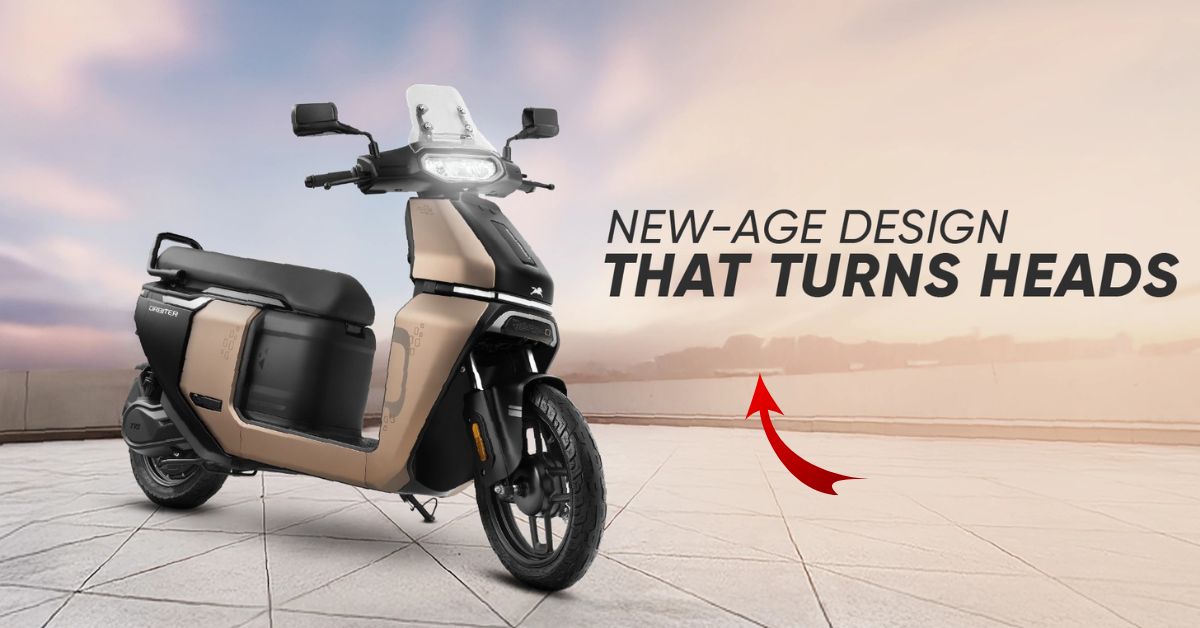
The Indian electric two-wheeler market is evolving faster than ever. For a long time, the segment was split between high-performance machines and basic, slow commuters. TVS, after the success of the premium iQube, recognized a massive gap: the need for a practical, family-oriented electric scooter that delivers genuine range and features without crossing the psychological ₹1 lakh barrier.
Enter the TVS Orbiter. Launched in August 2025, this isn’t just a variant; it’s a completely new platform designed for the masses. TVS is positioning it as the ultimate urban companion, boasting an impressive IDC-claimed range of 158 km and features that even some high-end EVs miss.
The Orbiter hits the market with an introductory ex-showroom price starting around ₹99,900 (inclusive of subsidies in select cities). This aggressive pricing makes it a direct threat to the current leaders in the affordable EV space. The question everyone is asking: Can the TVS Orbiter deliver on its range promise and become the definitive family electric scooter? We put it through its paces to find the answers.
QUICK SPECS TABLE (Key Highlights)
Here are the key figures that define the TVS Orbiter’s proposition:
| Specification | Detail |
| Motor Type | BLDC Hub Motor |
| Max Power Output | 2.5 kW (Rated) / 4.4 kW (Peak) |
| Max Torque | Not officially disclosed (Tuned for city) |
| Battery Capacity | 3.1 kWh (Fixed, IP67 rated) |
| IDC Claimed Range | 158 km |
| Top Speed | 68 kmph |
| Kerb Weight | 112 kg |
| Under-Seat Storage | 34 Litres (Best in Class, reportedly fits two helmets) |
| Ground Clearance | 169 mm |
| Charging Time (0-80%) | 4 hours 10 minutes |
Export to Sheets
EXTERIOR DESIGN & ROAD PRESENCE
The TVS Orbiter takes a refreshing departure from the conventional, rounded scooter design, opting instead for a boxy, futuristic, and utilitarian look. This aesthetic choice aligns with its core philosophy: practicality over flash.
- Stance: It has a substantial presence, mostly due to its large front apron and the segment-first 14-inch front wheel (paired with a 12-inch rear wheel). This unique wheel combination gives it a slightly commanding stance and enhances stability.
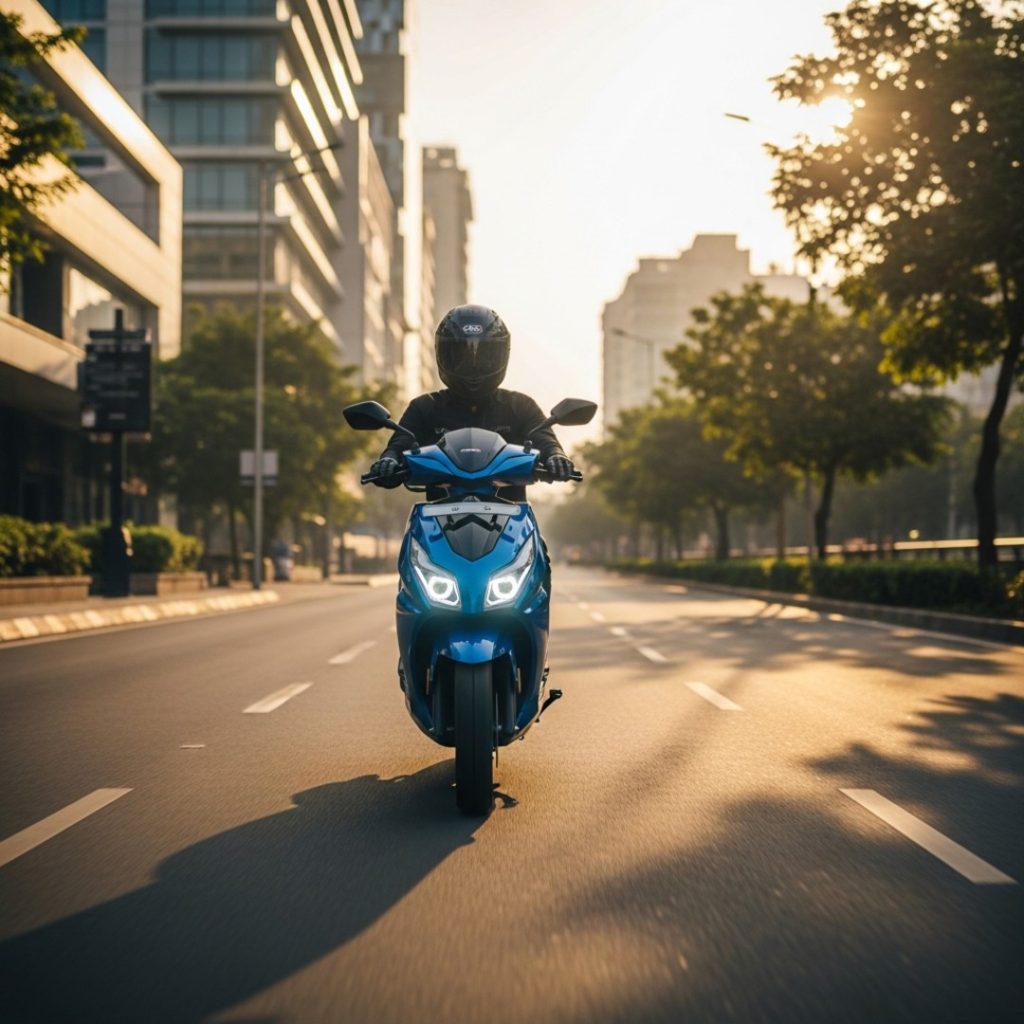
- Lighting: The scooter features a full LED lighting system, with integrated LED DRLs and indicators that lend it a modern, almost robotic look. The build quality, while sturdy, uses hard plastics, which is acceptable given the price point TVS is targeting.
- Colours & Styling: Available in a range of dual-tone colours like Neon Sunburst and Stratos Blue, the Orbiter is designed to look fun and approachable.
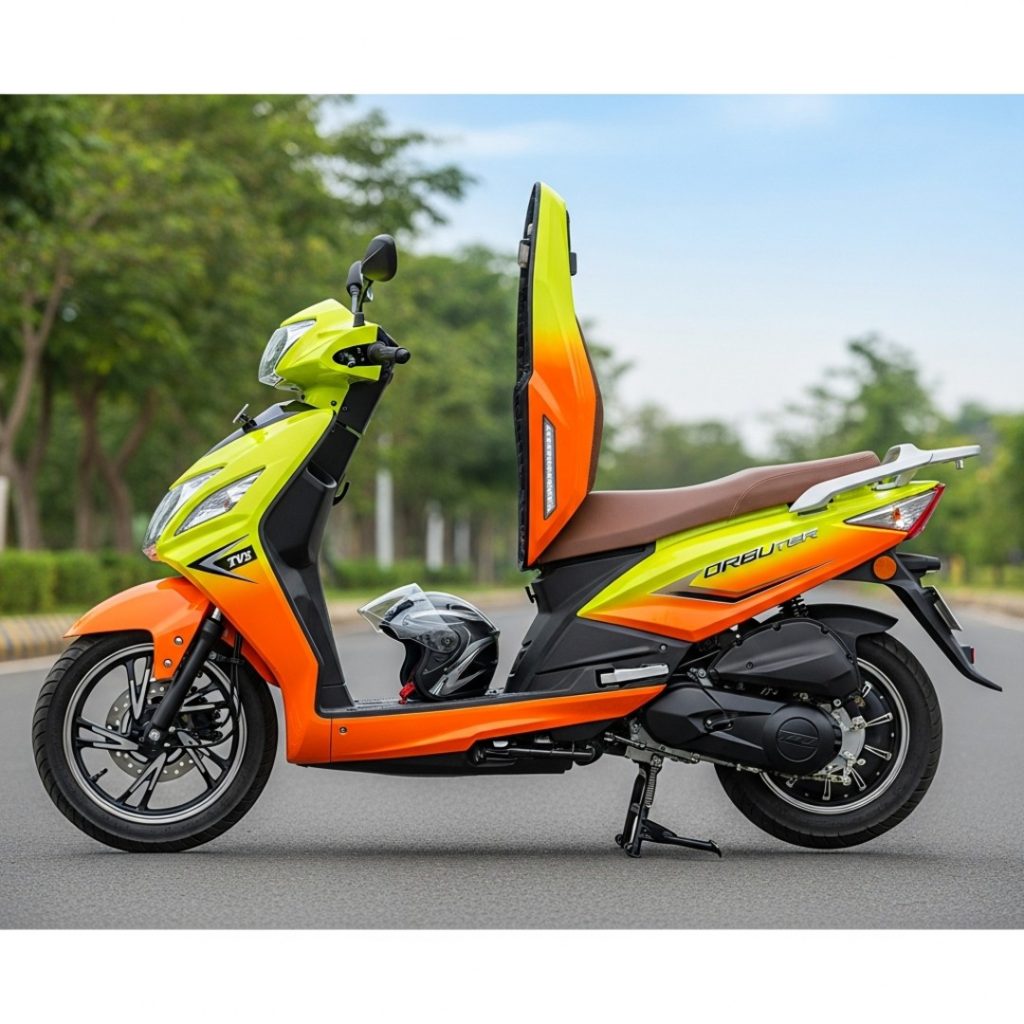
- Ergonomics: The scooter is clearly built for the Indian family. The 845 mm long flat seat is generous, and the 290 mm flat footboard is one of the roomiest in its class, perfect for carrying groceries, cylinders, or even children.
Does it turn heads on the road? While it might not have the sleek, aggressive lines of the Ather or the retro charm of the Chetak, the Orbiter’s unique, practical form factor and clean EV design certainly make it noticeable and distinct from the sea of petrol scooters.
INTERIOR, COMFORT & FEATURES
The Orbiter’s real strength lies in its cabin (or rather, its seating area) and the sheer volume of practical features it offers. TVS has clearly focused on Convenience, Comfort, and Connectivity (The 3 Cs).
Rider Comfort & Space
- Seat: The long, wide seat is a highlight. Pillion comfort is excellent, and the dedicated grab handles are well-placed. For riders of all sizes, the Orbiter feels instantly spacious and welcoming.
- Footboard: Taller riders will particularly appreciate the generous floorboard space and the high 169 mm ground clearance, which ensures you don’t scrape the belly over nasty speed breakers, even with a pillion.
Features & Utility (The Value Proposition)
The feature list is surprisingly rich for a sub-₹1 lakh EV:
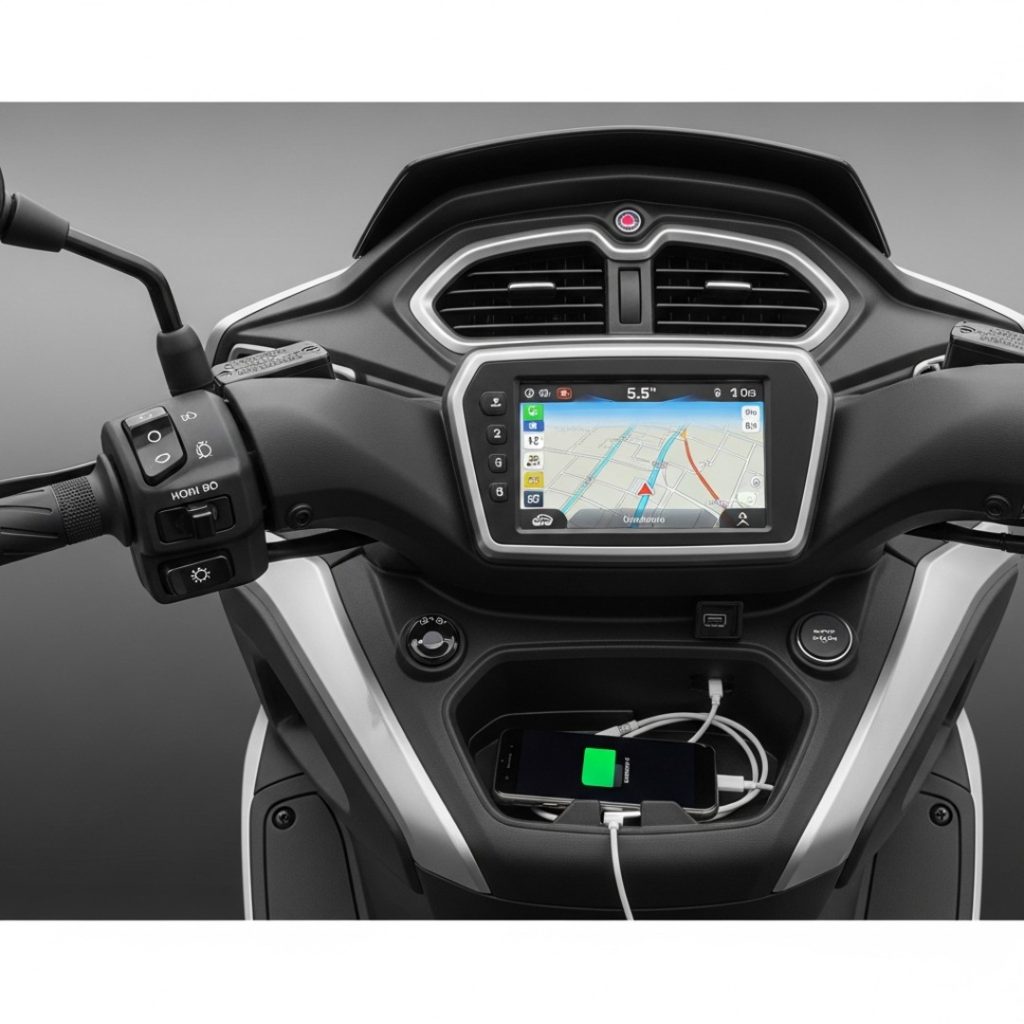
- Digital Dashboard: A large, clear 5.5-inch colour LCD display sits behind the handlebar. It’s not a touchscreen, which is a sensible cost-saving measure, but it is highly informative.
- Connectivity: Equipped with TVS SmartXonnect (Bluetooth connectivity), it offers crucial features like turn-by-turn navigation, call/SMS alerts, geo-fencing, and crash/fall alerts via the mobile app.
- Storage King: This is a segment benchmark. The massive 34 litres of under-seat storage is large enough, as TVS claims, to accommodate two half-face helmets or one full-face helmet and more. This practicality is a huge selling point for Indian families.
- Rider Aids: It includes premium features like Cruise Control (works up to 60 kmph), Hill Hold Assist (prevents rollback on inclines), and Reverse Assist—all rare at this price.
Missing Features: While packed, the scooter only offers drum brakes at both ends and lacks an interchangeable/removable battery option, which might be a deal-breaker for apartment dwellers without a charging point.
ENGINE PERFORMANCE & DRIVING DYNAMICS
The Orbiter is an EV, but let’s talk performance in the context of city commuting. It is designed to be a calm, predictable workhorse, not a drag racer.
- Motor: Powered by a 2.5 kW BLDC Hub Motor, the peak power is sufficient for urban sprints. The throttle response is linear and smooth—a huge relief in bumper-to-bumper traffic where jerky EVs can be annoying.
- Driving Modes: It offers two modes:
- Eco Mode: Limits top speed to about 46 kmph to maximise range. Perfect for congested inner-city lanes.
- City Mode: Allows a top speed of up to 68 kmph. This is the practical speed you’ll use most often and is adequate for city limits.
- Acceleration: The 0-40 kmph sprint takes a leisurely but manageable 6.8 seconds. It’s quicker than an entry-level petrol 110cc scooter but significantly slower than the sporty Ola S1 Pro or NTorq.
- Handling & Ride Quality: This is a major highlight. The combination of the 14-inch front wheel, telescopic forks, and the low 112 kg kerb weight makes the Orbiter exceptionally light and agile. The suspension absorbs potholes easily, offering a plush and composed ride quality that rivals the best in the segment. The larger front wheel is a game-changer for stability over uneven Indian roads.
SAFETY (Crucial Section)
Safety is paramount, especially for a family-focused EV.
- Braking: The Orbiter uses 130 mm drum brakes on both the front and rear wheels, paired with a Combined Braking System (CBS). While the CBS does distribute braking force and provides a decent stop, the lack of a front disc brake is a glaring omission for a vehicle at this price point. Under hard braking, especially with a pillion, the rear drum can feel spongy, and the wheel tends to lock up slightly too easily—a definite area for improvement.
- Electronics: The Hill Hold Assist is a fantastic safety feature for preventing rollback on sloped surfaces, a common struggle for scooter riders in India. The anti-theft alarm and geo-fencing add an extra layer of security.
- Build Quality: The battery pack is rated IP67, giving you peace of mind about water and dust resistance, a necessity for the Indian monsoon.
Global NCAP Rating: As with all two-wheelers, no Global NCAP rating is available.
REAL WORLD MILEAGE (The Truth)
The biggest anxiety with any EV is the “range anxiety.” TVS claims 158 km (IDC), but what is the real mileage in city traffic?
- IDC Claimed Range: 158 km
- Real World City Range (Eco Mode): Expect a comfortable and consistent range of 120-130 km if ridden predominantly in Eco mode with gentle acceleration.
- Real World City/Highway Mix (City Mode): In the City mode, with a mix of fast urban riding and short highway bursts, the range drops to a realistic figure of 95-105 km.
The Orbiter’s range is genuinely impressive for its segment and price. A realistic range of 100-110 km on a single charge is more than enough for a week’s worth of typical city commuting for most users, effectively killing any daily range anxiety.
Read more : Suzuki Burgman Street 125
THE COMPETITION (Auto-Selected Rivals)
The TVS Orbiter sits squarely in the affordable, practical electric scooter segment. Its fiercest competitors are the established players who also prioritize value and utility.
- Rival 1: Ola Electric S1 X (4kWh variant)
- Rival 2: Ather Rizta (Z 3.7kWh variant)
- Rival 3: Bajaj Chetak (Premium variant)
TVS Orbiter vs Rivals: The Affordable EV War
| Feature | TVS Orbiter (STD) | Ola S1 X (4kWh) | Ather Rizta (Z 3.7kWh) |
| Ex-Showroom Price (Approx.) | ₹99,900 | ₹1,09,999 | ₹1,46,999 |
| Battery Capacity | 3.1 kWh (Fixed) | 4.0 kWh (Fixed) | 3.7 kWh (Fixed) |
| IDC Claimed Range | 158 km | 190 km | 160 km |
| Top Speed | 68 kmph | 90 kmph | 80 kmph |
| 0-40 kmph | 6.8 seconds | Sub-5 seconds | Sub-4 seconds |
| Under-Seat Storage | 34 Litres | 34 Litres | 56 Litres (Class Best) |
| Front Wheel Size | 14-inch (Better Comfort) | 12-inch | 12-inch |
| Braking | Drum/Drum (CBS) | Drum/Drum (CBS) | Disc/Drum (CBS) |
Export to Sheets
Winner: Which one provides better Value For Money (VFM)?
- For the Tech Enthusiast/Performance Lover: The Ola S1 X offers more range and a higher top speed for slightly more money, giving it the edge on highway confidence.
- For the Ultimate Family Utility: The Ather Rizta wins hands down with its massive 56L boot and advanced software ecosystem, but you pay a significant premium for it.
- For the Balanced Commuter: The TVS Orbiter is the definitive VFM winner for the average Indian buyer. It offers a triple threat: excellent 158 km claimed range, best-in-class storage at 34L, and genuinely useful features like Cruise Control—all while keeping the price just under the critical ₹1 lakh mark. Is it worth the price tag? Absolutely, it democratises the feature set of a premium EV.
FINAL VERDICT
The TVS Orbiter is a calculated, well-executed product that directly addresses the needs of the mass-market EV buyer. It successfully packages high utility and genuine range into an affordable, comfortable, and reliable electric scooter. While the drum brakes are a disappointment, the Orbiter’s focus on ride comfort, storage capacity, and the surprisingly premium feature list (cruise control, hill-hold) makes it one of the most compelling EV launches of the year.
Buy it if:
- You want the best storage and riding comfort for daily commutes and family use.
- You prioritize real-world range and high ground clearance over outright acceleration.
- You are looking for an EV under the ₹1 lakh price point that still offers smart features like turn-by-turn navigation.
Skip it if:
- You are looking for sporty performance or a top speed above 70 kmph.
- You are a stickler for premium build quality (some plastics feel cheap).
- You feel unsafe without a front disc brake—a major safety compromise here.
FAQs (People Also Ask)
Q: What is the on-road price of the TVS Orbiter?
A: The on-road price varies based on state subsidies, RTO, and insurance. Generally, the on-road price for the TVS Orbiter starts from approximately ₹1.06 lakh in major metros like Delhi and Bangalore, but check for local state subsidies which can reduce this significantly.
Q: Is the TVS Orbiter battery removable?
A: No, the TVS Orbiter comes with a fixed 3.1 kWh battery pack. You must charge the scooter where it is parked, using the onboard charging port.
Q: What is the maximum speed of the TVS Orbiter?
A: The top speed of the TVS Orbiter is capped at 68 kmph in City mode, making it perfectly suited for urban traffic and ensuring maximum battery efficiency.
Q: Does the TVS Orbiter come with a CNG option?
A: No, the TVS Orbiter is a pure electric vehicle (EV) and does not have any petrol or alternative fuel options like CNG.