As a seasoned automobile journalist, I’ve seen countless bikes come and go in the Indian market. Very few, however, generate the kind of buzz and polarized opinion as the Yamaha MT-15 Is it a sharp, thrilling street-fighter that justifies its price with superior technology, or is it an overpriced 150cc bike riding on its R15 pedigree? Let’s dive deep into the V2 to give you the honest, no-fluff verdict you deserve.
The MT-15 V2 is not a brand-new launch; it’s a significant, iterative upgrade to an already popular model, replacing the older V1.0. Yamaha has finally addressed some critical shortcomings of the previous generation, most notably by adding Upside-Down (USD) front forks and Dual-Channel ABS (on select variants), two features that should have been standard from day one.
The ex-showroom starting price for the base variant is approximately ₹1,55,469, going up to about ₹1,74,000 for the top-spec Deluxe and MotoGP editions. This positions it firmly at the premium end of the 150cc to 200cc naked segment. Is the price tag a deterrent? For many, yes. But let’s see what you get for that money.
Quick Technical Specifications (V2.0 Deluxe)
| Specification | Detail |
| Engine | 155cc, Liquid-cooled, SOHC, 4-Valve, VVA |
| Max Power | 18.4 PS @ 10,000 rpm |
| Max Torque | 14.1 Nm @ 7,500 rpm |
| Transmission | 6-Speed Manual with Assist & Slipper Clutch |
| Brakes | Front: 282mm Disc, Rear: 220mm Disc |
| ABS | Dual-Channel (on DLX variant) |
| Suspension | Front: 37mm USD Forks, Rear: Linked-Type Monocross |
| Kerb Weight | 141 kg |
| Fuel Tank Capacity | 10 Litres |
| Ground Clearance | 170 mm |
Export to Sheets
Exterior Design & Road Presence: The Dark Side of Japan
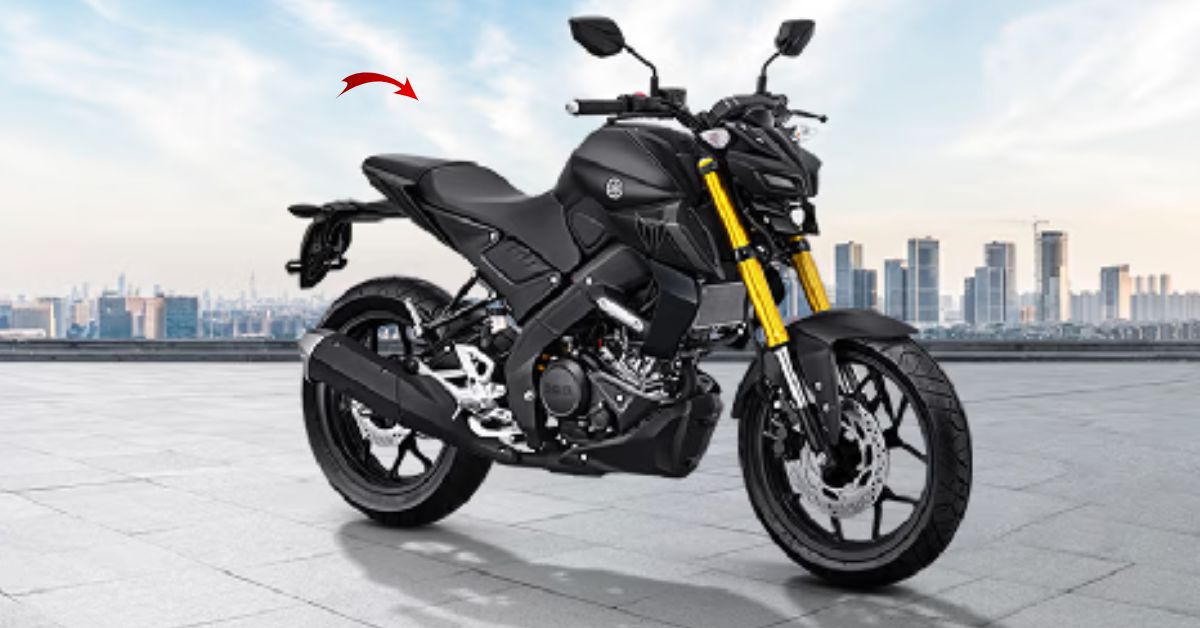
Yamaha markets the MT series as the ‘Dark Side of Japan,’ and the MT-15 V2 truly embodies that aggressive, almost menacing aesthetic.
The bike’s design is its biggest draw and a genuine head-turner. The front end is dominated by the bi-functional LED projector headlamp unit, which is shaped like a transformer’s face. Paired with the prominent Daytime Running Lamps (DRLs), it gives the MT-15 a unique and very aggressive “Macho” road presence that the competition struggles to match.
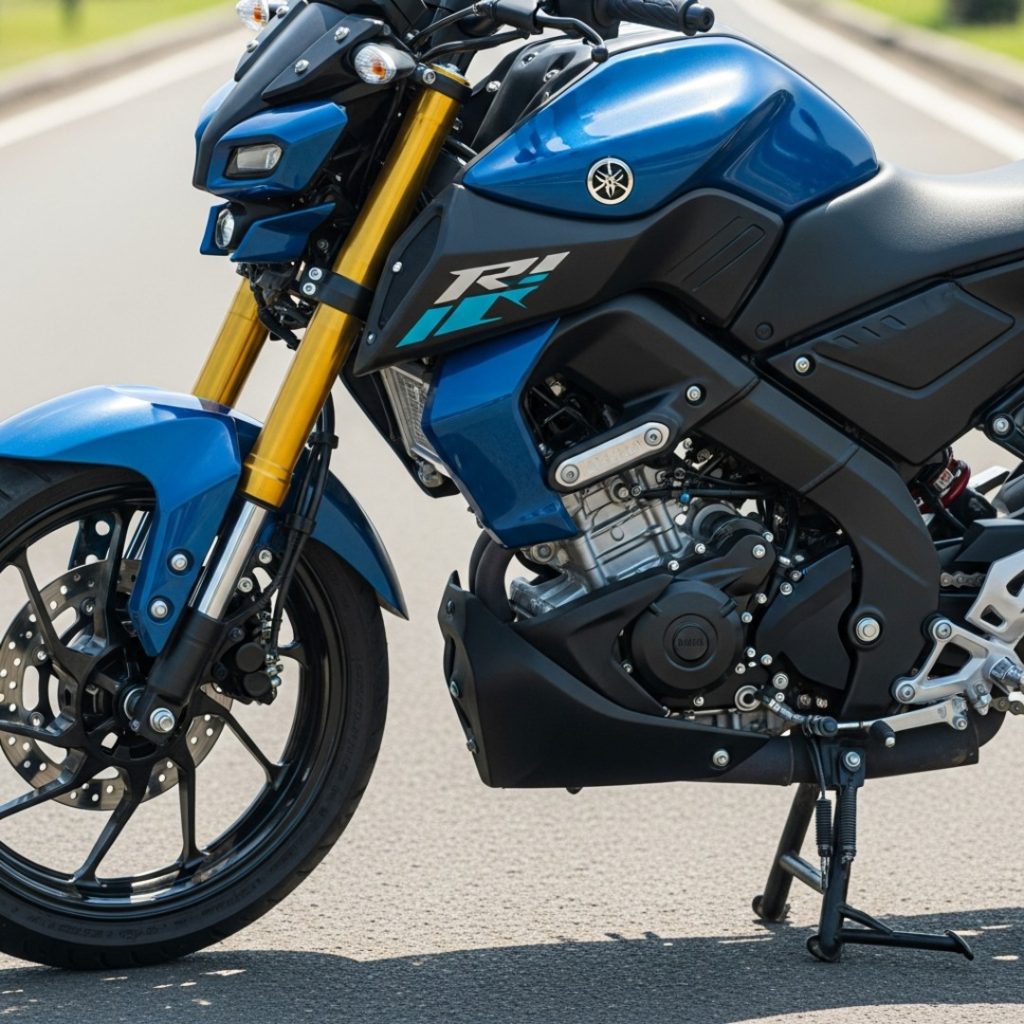
The chunky, sculpted fuel tank and minimal bodywork highlight the exposed mechanicals, giving it a muscular, stripped-down look. The Golden USD forks (introduced in the V2) are a massive visual upgrade, adding a premium, big-bike flair to the front stance. The short, sharp tail section borrowed from the R15 V4, complete with the split seat setup, completes the aggressive profile.
Does it turn heads on the road? Absolutely. Especially in vibrant colours like the Cyan or MotoGP edition, it stands out far more than its slightly muted street rivals. The aggressive stance makes it look like a much larger displacement machine than it actually is.
Riding Posture, Ergonomics & Features
The MT-15 V2 is a street-naked bike, but don’t confuse it with an upright commuter. The riding posture is an aggressive, forward-leaning stance, much sportier than bikes like the Pulsar or Apache. The seat height is 810 mm, which might be a stretch for shorter riders, but once you’re on, the bike feels extremely light at just 141 kg (Kerb Weight).
Comfort & Pillion Reality
- Rider Comfort: The rider’s seat is firm but adequate for city commutes and short weekend blasts. The slightly aggressive handlebar position encourages spirited riding, but for long, 300km highway stretches, you will feel it in your wrists and lower back.
- Pillion Comfort (The Achilles Heel): Let’s be blunt—the pillion seat is practically an afterthought. It is small, high, and completely unforgiving. If you frequently carry a pillion, you need to look elsewhere. Yamaha clearly prioritised the rider’s experience and design over two-up comfort.
Key Features and Technology
This is where the R15 genes truly shine. The MT-15 V2 is packed with segment-first and segment-leading features:
- VVA (Variable Valve Actuation): This is the game-changer. It gives the engine a dual personality: good low-end torque for the city and a powerful surge at the high end.
- Traction Control System (TCS): A big safety addition for a 155cc bike, helping prevent wheelspin on loose or wet surfaces.
- USD Forks: Not just for show, they genuinely improve front-end feedback and handling stability.
- Assist and Slipper Clutch (ASC): A life-saver in city traffic, making the clutch feel feather-light and preventing the rear wheel from locking up during aggressive downshifts.
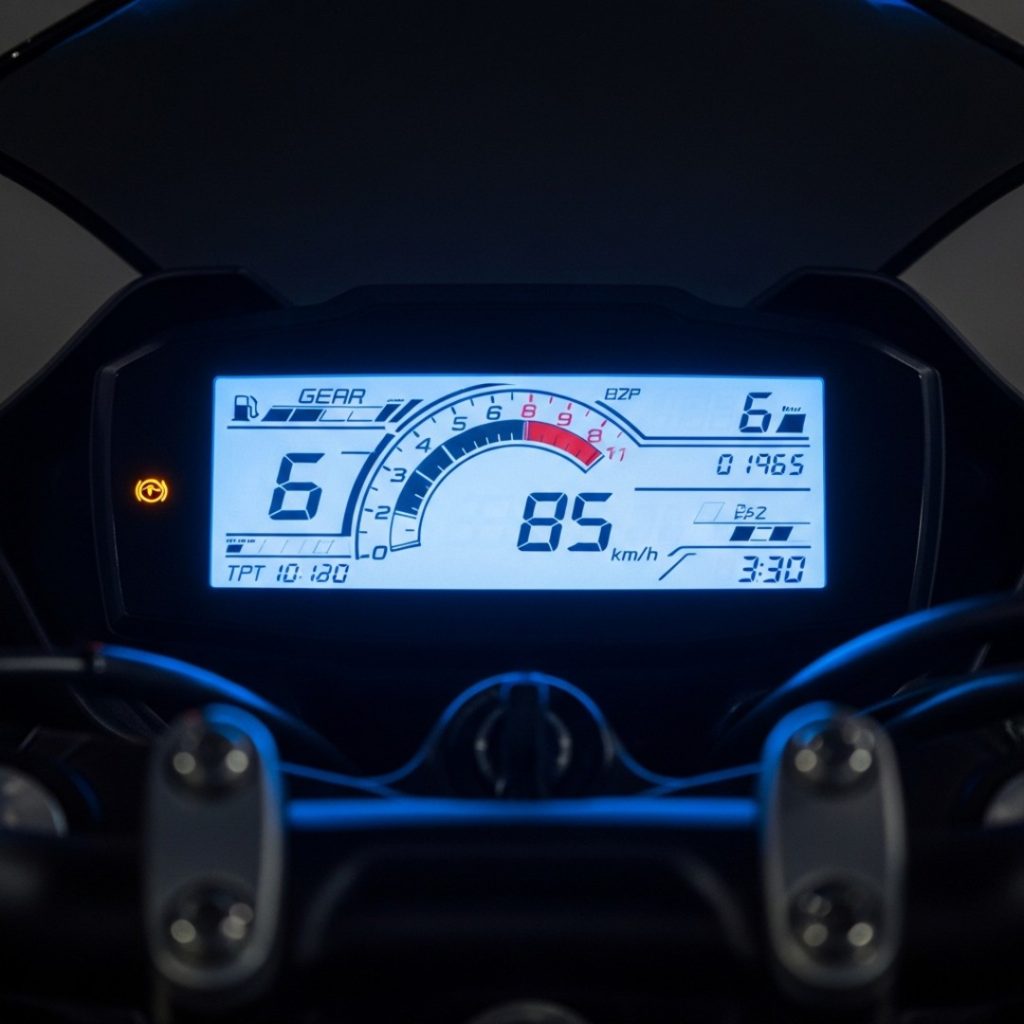
- Digital Instrument Cluster: A fully digital unit that includes a gear position indicator, VVA indicator, and even Bluetooth connectivity (Y-Connect) for notifications and basic telemetry on the Deluxe variant.
Missing Features: While the tech list is long, the biggest complaint for a bike at this price point is the Single-Channel ABS on the base variant. Given the high performance, Dual-Channel ABS should be standard across the board, which thankfully they have now corrected on the V2 Deluxe variants.
Engine Performance & Driving Dynamics
The heart of the MT-15 V2 is the same brilliant 155cc, liquid-cooled, 4-valve engine found in the R15, pushing out a healthy 18.4 PS of power and 14.1 Nm of torque.
City Drive Experience
In the city, the MT-15 V2 is an absolute hooligan (in the best way possible).
- Clutch & Gearbox: The assist and slipper clutch makes the clutch pull unbelievably light, which is a blessing in bumper-to-bumper traffic. The 6-speed gearbox is slick and precise.
- Low-End Torque: Thanks to the VVA system, the bike has decent pull from low RPMs, meaning you don’t have to constantly shift gears. It is incredibly easy to dart through narrow lanes and manage U-turns due to its low 141 kg weight.
- Parking: It feels like a bicycle, making it very easy to park and maneuver in tight spaces.
Highway Drive & Suspension
This is where the R15 legacy truly shines. Unlike a typical street-naked, the MT-15 is very happy at high speeds.
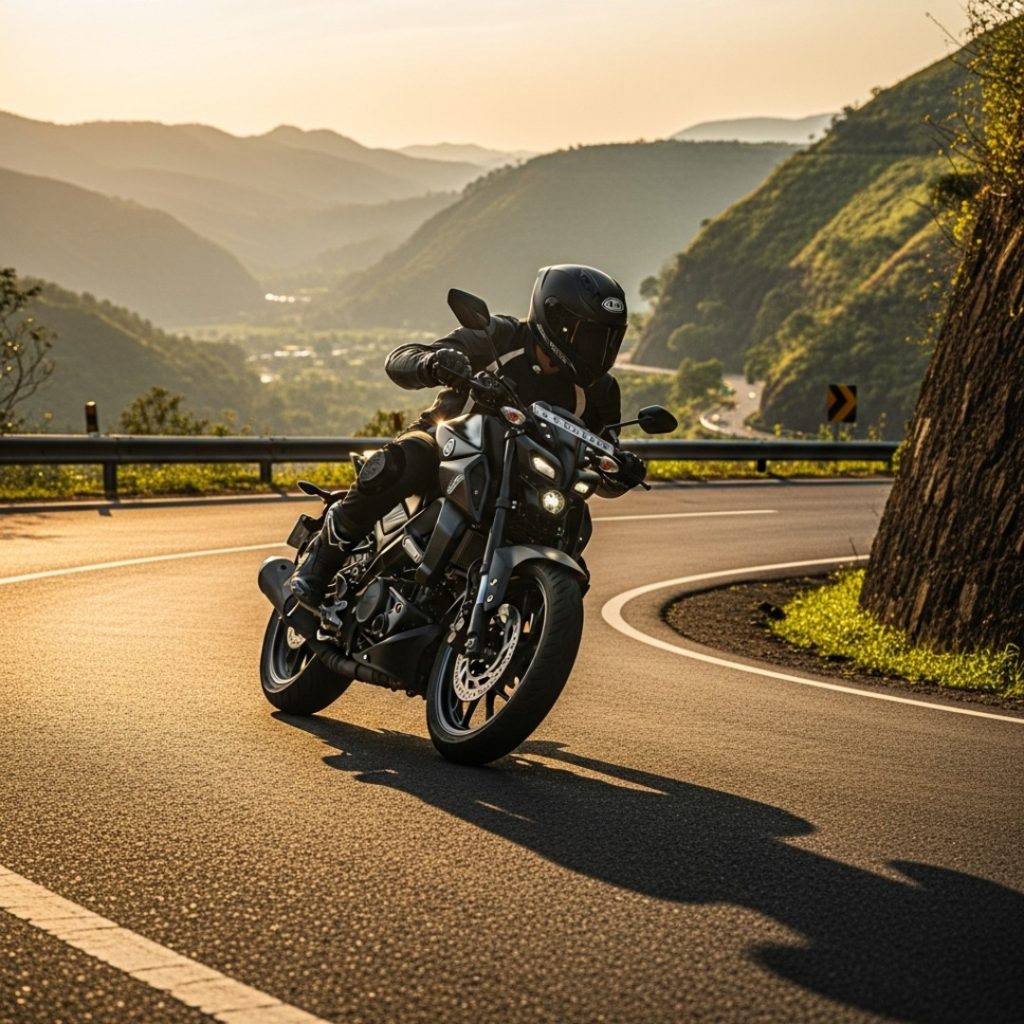
- High-Speed Stability: Cruising at 100 kmph is a breeze, with the bike feeling rock-solid and stable, which is a big credit to the Deltabox frame and the new USD forks. The bike doesn’t feel stressed, and there is minimal vibration till about 8,500 rpm.
- Handling & Cornering: The combination of the rigid Deltabox frame, the USD front forks, and the Monocross rear suspension makes this bike a corner-carver. It feels incredibly agile and responsive. Body roll is nearly non-existent.
- Suspension over Potholes: The USD suspension absorbs potholes reasonably well, but it is definitely tuned to be on the stiffer side to aid handling. It feels comfortable on mildly broken roads, but on large, sudden bumps and deep potholes (the ones India is famous for), the stiffness is quite noticeable and transmits a sharp jolt to the rider. It’s a trade-off for the superior handling.
Safety: Built for Performance, Now Better for Stopping
While Yamaha has never been transparent about its internal crash test ratings, the R15 platform (on which the MT-15 is based) is known for its excellent build quality and stable chassis.
- Braking: The 282 mm front and 220 mm rear disc brakes are sharp and provide excellent stopping power. The inclusion of Dual-Channel ABS (on Deluxe) is a non-negotiable safety feature that prevents wheel lock-up under hard braking, dramatically improving control. If you are buying the MT-15, please opt for the Dual-Channel ABS variant.
- Traction Control: As mentioned, this is a premium safety aid for a 155cc machine. It’s an electronic net that keeps you safe when you’re pushing the limits on slippery roads. It’s a huge plus.
- Build Quality: The fit, finish, and overall material quality are top-notch, far superior to some of its competitors, giving the rider a sense of security and premium feel.
Real World Mileage: The Truth Behind the Numbers
The MT-15 carries a high-performance, high-revving engine. The mileage you get depends heavily on how you ride it.
| Mileage Metric | Figure (Approx.) | Notes |
| ARAI Claimed Mileage | ∼56.87 kmpl | Achieved in controlled, ideal test conditions. Do not expect this. |
| Real World City Mileage | 45−48 kmpl | If you ride aggressively, keeping the RPMs high, expect ∼40 kmpl. |
| Real World Highway Mileage | 50−53 kmpl | Cruising at 80−90 kmph in top gear should easily fetch this. |
Export to Sheets
The fuel efficiency is actually quite commendable for a bike that delivers such a high level of performance. The real mileage in city traffic is typically in the 45−48 kmpl range, which is perfectly respectable. It means your small 10 litre fuel tank can still give you a decent range before a refill.
Read more : Kawasaki Ninja ZX-6R
The Competition: MT-15 V2 vs Rivals
The Yamaha MT-15 V2 is positioned in a fierce segment, competing with bikes that often offer more engine capacity or a lower price point. Based on its premium positioning, performance, and aggressive styling, its strongest direct rivals are the KTM 160 Duke and the TVS Apache RTR 160 4V.
Yamaha MT-15 V2 vs KTM 160 Duke vs TVS Apache RTR 160 4V
| Feature | Yamaha MT-15 V2 (Deluxe) | KTM 160 Duke | TVS Apache RTR 160 4V (Top-Spec) |
| Ex-Showroom Price (Approx.) | ₹1.66 Lakhs | ₹1.71 Lakhs | ₹1.33 Lakhs |
| Engine Capacity | 155 cc (Liquid-Cooled, VVA) | 164.2 cc (Liquid-Cooled) | 159.7 cc (Oil-Cooled) |
| Max Power | 18.4 PS | 18.9 PS | 17.55 PS |
| Max Torque | 14.1 Nm | 14.5 Nm | 14.73 Nm |
| Kerb Weight | 141 kg (Lightest) | 151 kg | 146 kg |
| ABS Type | Dual-Channel (DLX) | Single-Channel | Single-Channel (or Dual in higher 200cc version) |
| USP | VVA Tech, USD Forks, Slipper Clutch, TCS | Raw Performance, Brand Appeal | Feature-Loaded, Best Value, Ride Modes |
Export to Sheets
Which one provides better Value For Money (VFM)?
- Best VFM: The TVS Apache RTR 160 4V is the clear VFM winner. It offers comparable power, tons of features (like ride modes), and a lower price tag.
- Best Performance: The KTM 160 Duke is slightly more powerful and offers the typical KTM punch, but it is also the most expensive.
- Best Technology/Refinement: The Yamaha MT-15 V2 is the winner here. It offers the most refined engine (liquid-cooled, VVA), the best handling dynamics due to the Deltabox frame and USD forks, and premium safety tech like TCS and Dual-Channel ABS. You pay a premium for the superior, big-bike tech and the head-turning style.
Final Verdict: The Urban Ninja
After spending significant time with the Yamaha MT-15 V2, my verdict is clear: this is a purpose-built, premium street-naked bike designed for an enthusiast who prioritises style, agility, and technology over absolute value-for-money or pillion comfort.
It takes the legendary performance of the R15’s engine, wraps it in a stunning, aggressive body, and provides the best handling experience in the 150-160cc segment. Yes, it’s expensive, and the pillion seat is a joke, but the moment you hit the city street and feel that VVA-driven surge, the price seems a little more justified.
Buy it if:
- You want the most aggressive and stylish bike in the segment that turns heads everywhere.
- You prioritize handling and engine refinement; the Deltabox frame and VVA engine are superb.
- You are primarily a solo rider who loves an agile, fun city machine that can handle occasional spirited highway blasts.
Skip it if:
- Your primary need is a comfortable pillion seat or a plush ride over bad roads.
- You are looking for the best value-for-money proposition (the TVS Apache 160/200 4V offers better VFM).
- You are on a very strict budget, as the on-road price easily crosses the ₹1.90 Lakh mark in most metro cities
People Also Ask (FAQs)
Q1. What is the on-road price of the Yamaha MT-15 V2 in major Indian cities?
The on-road price of the Yamaha MT-15 V2 (Deluxe) typically ranges from ₹1.85 Lakhs to ₹2.00 Lakhs depending on the state and city (RTO, Insurance, and other charges). For example, the approximate on-road price is ₹1.88 Lakhs in Mumbai and ₹1.75 Lakhs in Delhi.
Q2. Is the Yamaha MT-15 V2 comfortable for long rides?
While the engine and stability are excellent for highways, the aggressive riding posture and the stiffly-sprung suspension mean the MT-15 V2 is not ideally suited for long-distance touring. You will need to take frequent breaks. The hard, small seat is the main issue.
Q3. Does the MT-15 V2 have a quick shifter?
Yes, the top-end MotoGP Edition and select Deluxe variants come equipped with a Quick Shifter for clutch-less upshifts, further enhancing the sporty riding experience.
Q4. What is the typical waiting period for the MT-15 V2?
The waiting period generally depends on the variant and colour. Standard colours usually have a waiting period of 2 to 4 weeks, while the newly launched colours or special MotoGP/Ice Fluo editions can have a waiting period stretching up to 6-8 weeks in high-demand metro cities.